Radio Brisvaani

Ayodhya, June 25 (IANS) As India marks the 50th anniversary of the 1975 Emergency, saints and spiritual leaders across the country have drawn sharp comparisons between the “dark days” of the former Prime Minister Indira Gandhi and the present era under PM Narendra Modi’s leadership.
Reflecting on the historic moment, they said that while the Emergency period was marked by suppression, fear, and hardship, today’s India is defined by democratic expansion, development, and public welfare.
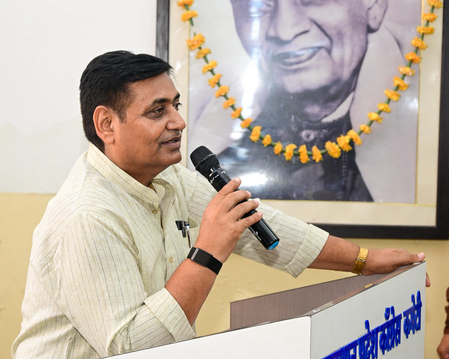
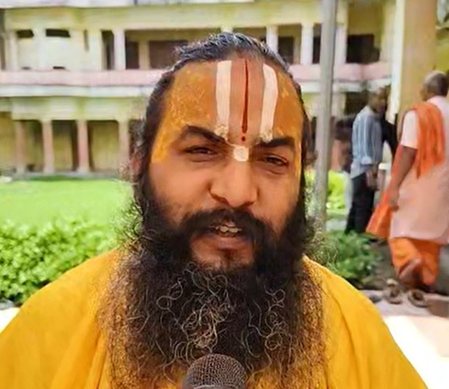
Speaking to IANS, prominent saints from Ayodhya recalled the trauma of June 25, 1975, when civil liberties were suspended, and political dissidents were jailed, contrasting it with the present government’s focus on public welfare and democratic governance.
Mithlesh Nandani Sharan Ji Maharaj of Hanumant Residence in Ayodhya said, “If we compare Emergenvy with the present, there is a huge difference. Back then, people were unhappy, tortured, and even starving. Today, under PM Modi, people are content and receiving the benefits of various government schemes. There is peace, prosperity, and happiness now. That time was filled with suffering.”
He added, “On June 25, 1975, and now on June 25, 2025, we are witnessing a different India. It is a testament to the growth of democracy and welfare that people are happy with the current government.”
Diwakar Acharya Maharaj of Hanumangarhi, Ayodhya, echoed similar sentiments and criticised the motives behind the imposition of Emergency by then Prime Minister Indira Gandhi.
“On June 25, 1975, under the leadership of the then President Fakhruddin Ali Ahmed, the Emergency was imposed to secure Indira Gandhi’s political interests. By doing so, democracy and the Constitution were put at stake. Nationalists were jailed, unrest was spread, and dynasty politics were promoted,” he said.
He continued: “This act of declaring an Emergency at midnight was not for the nation’s interest but to protect personal ambition. Today, in its 50th year, the country has awakened and rejected such anti-democratic practices. Those who once called themselves champions of democracy were the ones who damaged it.”
Saint Satendra Das Vedanti Ji Maharaj also weighed in with a historical and philosophical perspective.
“We must understand the stark contrast. Today, India is growing while preserving democratic values, expanding its sovereignty, and building national pride on the global stage. Citizens’ safety and convenience are prioritised. But during the Emergency, these values were destroyed in the name of self-preservation by the ruling power.”
He added: “The 1975 Emergency was a black chapter in independent India’s history. It wasn’t a policy for national security but a reaction born out of political fear. It violated constitutional norms and trampled democratic institutions. Fifty years on, we should remember how political frustration led to the dismantling of democratic systems.”
Highlighting the importance of public awareness, he said, “Today’s generation must learn both sides—the time when power was misused to suppress dissent, and the present, when the country is moving ahead by upholding democratic principles and fostering inclusive growth. The public, especially the youth, must see how democracy triumphs when citizens rise to challenge unjust power.”
On this very day, 50 years ago, June 25, 1975, India witnessed one of the darkest phases in its democratic history when the then Prime Minister Indira Gandhi imposed a national Emergency. The proclamation came late at night, suspending civil liberties, censoring the press, and arresting thousands of political opponents without trial. The Emergency lasted 21 months, until March 21, 1977.
This was the third national Emergency in India, following the first in 1962 during the India-China war and the second in 1971 during the India-Pakistan conflict.
The imposition of the Emergency came amid mounting political unrest, inflation, unemployment, and corruption. Student-led protests and mass agitations, especially those led by veteran leader Jayaprakash Narayan in Bihar and Gujarat, had gained massive traction.
A crucial tipping point came with the Allahabad High Court verdict on June 12, 1975. Justice Jagmohanlal Sinha ruled that Indira Gandhi had misused government machinery during her 1971 election campaign, and found her guilty under the Representation of the People Act, 1951. The court barred her from holding elected office for six years.
Though the Supreme Court granted her a conditional stay allowing her to continue as Prime Minister without voting rights, the political damage was significant. In response, on June 25, 1975, then-President Fakhruddin Ali Ahmed, on Indira Gandhi’s recommendation, declared a state of Emergency under Article 352, citing internal disturbances.
The government cracked down on the Opposition, arresting key leaders like Jayaprakash Narayan, Atal Bihari Vajpayee, Lal Krishna Advani, and others. Press censorship was imposed, and civil liberties curtailed.
The Emergency ended on March 21, 1977, shortly before the general elections held between March 16 and 20. The Indian electorate delivered a strong message by voting the Congress out of power. On March 24, 1977, the Janata Party, led by Morarji Desai, formed the new government, marking the first non-Congress government at the Centre since independence.
The era left a deep scar on India’s democratic fabric, but also reinforced the resilience of its constitutional institutions and the will of its people.
–IANS
jk/dan