Radio Brisvaani

New Delhi, Oct 19 (IANS) There is a strange sense of satisfaction — almost poetic justice — in watching Pakistan being battered by Afghanistan. Some might call this feeling sadistic, but as Chanakya wisely said, “The enemy of my enemy is my friend.” For India, long the target of Pakistan’s hostility and deceit, the current turn of events feels like history correcting itself.
Since its creation in 1947, Pakistan has relentlessly pursued a campaign of animosity against India — waging wars, fuelling terrorism, and backing everything that goes against India. Now, in its 78th year, the nation finds itself trapped in the chaos it has been unleashing on others. The Taliban, its one-time ally and creation, is now turning its guns on the Pakistani Army.
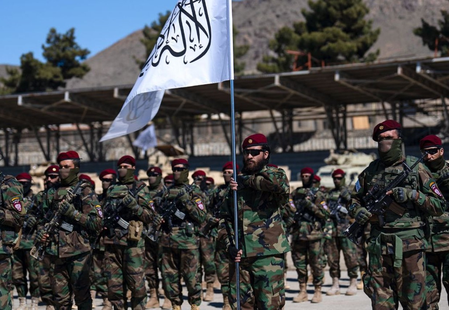
Social media is flooded with videos of Taliban fighters humiliating Pakistani soldiers, burning their camps, and parading captured uniforms as trophies. These images capture not just the battlefield humiliation but also the deep resentment Afghanistan harbours toward Islamabad — a country that exploited it for decades in the name of strategic depth.
As usual, when faced with failure, Pakistan’s wrath has fallen on the powerless. Its Army, having failed to subdue the Taliban, is persecuting helpless Afghan refugees within its borders — demolishing homes, thrashing civilians, and even denying children access to schools. Such actions are abhorrent, yet human rights organisations that otherwise speak loudly on smaller issues involving India have chosen silence.
The Pakistani establishment has a long record of targeting the innocent. During Operation Sindoor, when Indian precision strikes neutralised Pakistani-backed terrorists, the Pakistan Army retaliated by shelling civilian areas in Jammu and Kashmir. Over 25 Indians were killed, around 50 were injured, and even places of worship — a temple, a gurdwara, and a mosque — were damaged.
Ethics have never been the Pakistan Army’s strength. For decades, it has run terror camps, inflamed sectarian passions, and offered sanctuary to some of the world’s most notorious terrorists. Osama bin Laden, the mastermind of the 9/11 attacks, lived comfortably in Abbottabad for years until he was eliminated by the US forces. Dawood Ibrahim, India’s most wanted criminal, continues to find a safe haven there, even as Pakistan denies his presence.
Pakistan’s moral bankruptcy was captured poignantly in the film ‘Border’. In one scene, an Indian soldier offers water to a severely wounded Pakistani. Instead of accepting compassion, the Pakistani tries to stab his benefactor. The Indian soldier, embodying dignity and restraint, chooses not to retaliate. This contrast defines both nations’ characters — humanity versus hatred.
That moral distinction was once again visible during Operation Sindoor, when the Indian Army neutralised terrorists without harming a single civilian. Pakistan, in response, deliberately targeted civilians, underlining the difference between a professional army and a terror-driven force.
Meanwhile, Afghanistan has reached its breaking point. The Afghans, long subjected to Pakistan’s manipulation, are now asserting their independence. Few could have imagined that the Taliban — nurtured and supported by Pakistan since the 1990s — would one day fight its patron.
The Taliban first rose during the civil war following the Soviet withdrawal, capturing Kabul in 1996 and imposing a harsh, ultraconservative version of Islamic law. That regime lasted until 2001, when a US-led invasion toppled it after the September 11 attacks. Pakistan’s duplicity during this period — aiding the Taliban while posing as an ally to the West — made Afghanistan a villain, while the real mastermind hid in Rawalpindi.
When the Taliban returned to power on August 15, 2021, Pakistan rejoiced. The generals in Islamabad dreamed of turning Afghanistan into a puppet state and relocating their terror networks there. But they miscalculated. Afghans, fiercely proud of their sovereignty, have refused to bow to Pakistani control.
Afghanistan’s Foreign Minister, Amir Khan Muttaqi, summed it up during his visit to India: “The Soviet Union came and was defeated. The troops of more than 50 countries came with the US and NATO — there was fighting for 20 years — and now Afghanistan is independent and standing on its own feet.”
And this is exactly what Pakistan’s establishment cannot tolerate — an independent Afghanistan, thinking freely and rekindling ties with India.
Unable to accept Afghanistan’s will to exert independence, Pakistan has resorted to its default setting — violence. It has bombed Afghan border cities, killing civilians, including women, children, and even cricketers. And true to its habit, Islamabad is trying to twist the narrative, blaming India for the escalating tensions.
The international community’s silence is striking. Despite overwhelming evidence, few global powers have called out Pakistan for its cross-border aggression. Yet, the facade is cracking. Pakistan stands exposed as a terror-producing nation that has long tried to destroy South Asia’s peace.
For India, this moment carries a sense of grim amusement. The nation that once weaponised extremism to destabilise others is now being consumed by it. The poison Pakistan spread for decades is corroding its own foundations.
The unfolding conflict between Pakistan and Afghanistan is more than a regional skirmish — it is a moral reckoning. It exposes the dangers of nurturing extremism for political gain and the inevitability of karmic justice. Pakistan’s deep state may still cling to denial, but reality is closing in fast.
As Afghanistan fights to reclaim its dignity and independence, and as India watches from the sidelines, one truth stands clear: those who sow hatred and terror eventually fall victim to their own creation. Pakistan’s long tryst with duplicity and violence has finally come full circle — the poison it brewed for others is now destroying itself.
(Deepika Bhan can be contacted at deepika.b@ians.in)
–IANS
dpb/sd/