
Radio Brisvaani

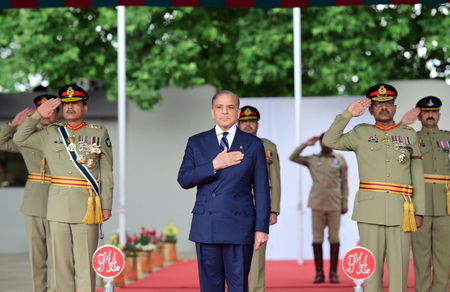
Islamabad, Dec 7 (IANS) After the passage of the 27th Constitutional Amendment through both houses of parliament and signed with unusual speed by Pakistan President Asif Ali Zardari, the nation has structurally shrunk provincial autonomy and strengthened military authority over important national domains, as per a report.
Supporters of the amendment have stressed that the amendment is needed for Pakistan’s chronic instability, according to a report in International Policy Digest. They have argued that undiluted democracy does not function in Islamic societies, while controlled democracy maintains order. However, their claim collapses if analysed. Countries that have a Muslim population in the majority, like Indonesia, Senegal, and Tunisia — in its pre-coup decade — showcase that pluralism and Islam can work together and are often mutually reinforcing.
“Pakistan’s problem has never been some cultural incompatibility with democracy. The real obstacle is institutional insecurity: a deep suspicion of provincial autonomy, a reflex to manage diversity through command-and-control governance, and a persistent belief among elites that popular decision-making is simply too dangerous to trust,” the report said.
The 27th Amendment reinforces financial and policy-making power, strengthens the judicial oversight mechanism, and deepens the military’s supervisory position within the constitutional framework. Provincial governments, who have already been constrained, now discover themselves officially subordinated, it added.
“Pakistan has now formally chosen centralisation over federalism. With the passage of the 27th Amendment, pushed through by a two-thirds parliamentary majority and signed with unusual speed by the President, the state has structurally shrunk provincial autonomy and strengthened military authority over key national domains. For a country built on extraordinary linguistic, ethnic, and regional diversity, this is not routine constitutional maintenance; it is a fundamental rewiring of the republic.”
The 27th Amendment marks a turning point, as by opting for coercive cohesion over negotiated federalism, Pakistan has chosen short-term control at the expense of long-term stability. The centre may have achieved constitutional supremacy, yet it has also jeopardised the political cohesion on which the future of the country relies.
“Layered onto this structural shift is what many now call the ‘Asim Munir model’, not a coup in the old sense but a subtler arrangement: military rule tucked inside a democratic shell. The optics remain civilian, but the strategic decisions do not. Policy is drafted at GHQ, economic diplomacy is steered by the security establishment, and investment priorities are shaped under military oversight. Elected politicians perform the rituals of governance—parliamentary sessions, press briefings, handshakes with diplomats—while the real direction comes from elsewhere,” the International Policy Digest report said.
“For some, this feels efficient, even reassuring: finally, someone is taking charge. But efficiency comes with a trade-off. The buffer that once existed between military power and public accountability is gone. If this truly is the new model, then the outcomes—jobs, inflation, growth, and the daily anxieties of ordinary families—belong to the generals as well. They cannot retreat into the shadows if things go wrong. In this version of Pakistani politics, the military does not simply call the shots; it owns them,” it added.
–IANS
akl/vd