Radio Brisvaani

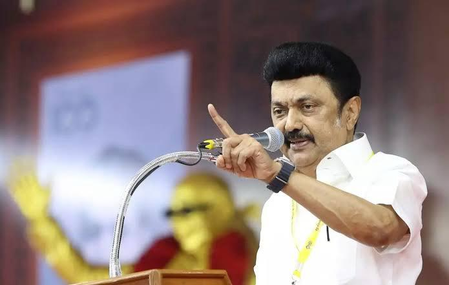
Chennai, Jan 12 (IANS) Tamil Nadu has stepped up its efforts to secure approval for proposed metro rail systems in Coimbatore and Madurai, following a renewed appeal by Chief Minister M.K. Stalin to Prime Minister Narendra Modi to reconsider the Centre’s earlier rejection of the two projects.
Senior state officials said the government is preparing to resubmit its case with additional data to address concerns raised by the Centre.
After the Chief Minister’s intervention, the state has revised its justification for both metro proposals and routed the updated documents through the state government. These will soon be forwarded to the Union Ministry of Housing and Urban Affairs for fresh consideration, according to K. Gopal, Secretary for Special Projects, and M.A. Siddique, Managing Director of Chennai Metro Rail Limited (CMRL).
Officials said the Centre’s primary objection was the perceived inadequacy of projected ridership in both cities. “The assessment was that demand does not justify metro rail systems,” Gopal said. “However, Coimbatore and Madurai are rapidly expanding industrial cities with growing populations and economic activity. We have now provided detailed data to demonstrate why metro rail is essential for their long-term mobility needs.”
The renewed outreach comes after the Union ministry returned Tamil Nadu’s detailed project reports (DPRs), citing non-compliance with the 2017 Metro Rail Policy. In its earlier communication, the ministry had argued that the proposals overstated ridership, understated engineering challenges, and did not meet population thresholds required for metro projects under a 50:50 equity-sharing model with the Centre.
For Coimbatore, the ministry questioned projections of around 5.9 lakh daily passengers on a proposed 34-km metro network, noting that this figure exceeded ridership recorded on Chennai Metro’s 55-km Phase I corridor as recently as February 2025. It also pointed to relatively short average trip lengths of 6-8 km and road traffic speeds comparable to the proposed metro, suggesting limited scope for a major modal shift. The appraisal further highlighted narrow road widths of 7-12 metres along key corridors, raising concerns about the feasibility of elevated viaducts and wide stations without extensive demolitions.
A similar evaluation was made for Madurai, where the Union ministry said the city’s comprehensive mobility plan favoured a bus rapid transit system over a metro. With Madurai also falling below the prescribed population threshold, the Centre argued that lower-cost, scalable alternatives such as bus network expansion would offer better value.
Despite these reservations, the Tamil Nadu government remains firm that metro systems are crucial for meeting future transport demands in both cities and hopes the revised submissions will prompt a favourable review.
–IANS
aal/dpb