Radio Brisvaani

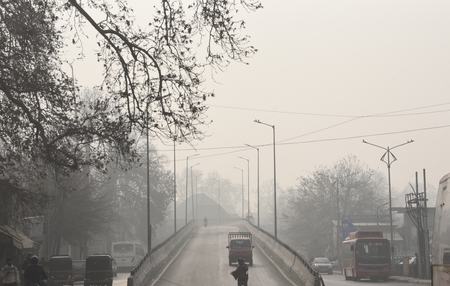
Srinagar, Jan 12 (IANS) The minimum temperature improved across Kashmir on Monday, even though it did not rise above the freezing point. Srinagar city recorded minus 2.4 degrees Celsius as the minimum temperature, while Gulmarg and Pahalgam both had minus 3.4 degrees.
Jammu had 3.4 degrees Celsius, Katra town 5, Batote 4.3, Banihal 5.1 and Bhaderwah minus 1.2 as the lowest temperature of the night.
The Meteorological (MeT) Department forecast said the weather is likely to be partly cloudy between January 11 and January 15.
“Weather would remain generally cloudy with light rain/snow at isolated to scattered higher reaches in the Kashmir division between January 16 to 17. Partly cloudy to generally cloudy weather is expected on January 18 and 19. On January 20, generally cloudy weather with light rain/snow at isolated places. Between January 21st to 23rd, partly to generally cloudy weather with light rain/snow at scattered places is expected. Between January 24 to January 25, partly cloudy weather is expected in J&K,” the MeT Department has said.
The department issued an advisory, saying there will be a gradual rise in minimum temperature at many places from Monday onwards. “Moderate fog over plains of Jammu division with dense fog at isolated places is likely to continue during the next five days,” the MeT advisory said.
An alarming situation faces Jammu and Kashmir, especially the Valley, as the MeT Department has forecast mostly cold, dry weather till January 25.
The continued dry spell has raised alarm across the union territory as all the water bodies on which agriculture, horticulture and drinking water needs are based depend on heavy snowfall during the ongoing 40-day long period of harsh winter locally called the ‘Chillai Kalan’.
This crucial 40-day-long period is already more than halfway through, and the plains of the Valley are yet to witness this season’s first snowfall. Chillai Kalan ends on January 30. Snowfall in February and March is of little consequence as it melts quickly and does not help replenish the perennial water reservoirs in the mountains.
–IANS
sq/dpb