Radio Brisvaani

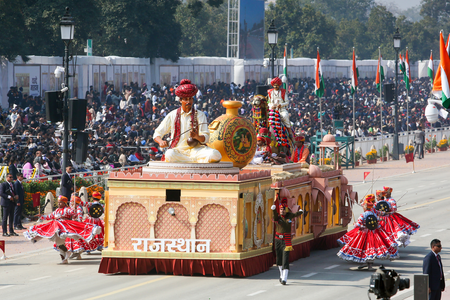
Jaipur, Jan 26 (IANS) Rajasthan’s tableau emerged as one of the major attractions at the Republic Day Parade on Kartavya Path in Delhi on Monday, as the nation celebrated its 77th Republic Day.
Based on the globally renowned Usta art of Bikaner, the tableau captivated spectators with its exceptional craftsmanship, cultural richness, and vibrant visual presentation.
The front section of the tableau featured a 180-degree rotating statue of an artist playing the Ravanahatta, one of Rajasthan’s oldest and most iconic folk instruments.
On both sides, beautifully decorated surahis (water pitchers), flasks, and lamps adorned with Usta art were displayed in ornate frames, forming a striking visual ensemble. This portion of the tableau rose to a height of nearly 13 feet.
The trailer section showcased a rotating traditional flask embellished with Usta art, along with detailed scenes of artisans engaged in handicraft work, highlighting the living traditions and craftsmanship associated with the art form.
At the rear, a large camel and camel rider statue symbolised Rajasthan’s desert landscape and vibrant folk life.
The arches on both sides were decorated with intricate leafy gold work, further enhancing the grandeur and visual appeal of the display.
Adding to the spectacle, artists performing the Gair folk dance around the tableau brought Rajasthan’s cultural identity to life, creating a dynamic blend of movement, music, and tradition.
Overall, the tableau presented a vibrant confluence of traditional art, folk culture, and royal heritage, earning widespread appreciation from spectators and dignitaries.
Usta art is a traditional royal gold-inlay craft originally practised on camel hide.
Believed to have originated in Iran, the art developed during the Mughal period and reached Bikaner during the reign of Maharaja Rai Singh, where local artisans gave it a distinctive regional identity.
The craft uses 24-carat gold leaf and natural pigments and has now expanded to wood, marble, glass, and wall decor.
Bikaner’s Usta art has also received a Geographical Indication (GI) tag, recognising its authenticity, heritage value, and cultural significance.
–IANS
arc/pgh