Radio Brisvaani

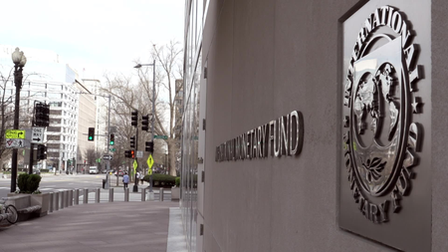
Washington, Jan 29 (IANS) Emerging market economies have shown notable resilience despite trade disruptions, geopolitical uncertainty, and shifting global financial conditions, senior International Monetary Fund (IMF) officials said here on Thursday, while warning that risks remain tilted to the downside.
Presenting the IMF’s latest assessment ahead of a conference on emerging economies, IMF Economic Counsellor and Director of Research Pierre-Olivier Gourinchas said global growth has held up better than expected even after recent tariff shocks and heightened uncertainty.
“Global growth continues to show resilience, despite trade disruptions and heightened uncertainty,” Gourinchas said, citing the IMF’s January World Economic Outlook update, which revised the 2026 global growth forecast up to 3.3 per cent.
He said this marked the third upgrade since April last year and was stronger than projections made in October 2024.
“This is strongly suggesting that the global economy has been shaking off the immediate impact of the tariff shock,” he added.
Gourinchas attributed the resilience to several offsetting forces, pointing first to “the great agility of the private sector”, which he said kept supply chains “smoothly functioning” by reorganising trade in response to disruptions.
He also cited “supportive financial conditions”, strong investment in technology and artificial intelligence with positive spillovers, particularly for Asian exports, and stronger fiscal stimulus in some economies, including China and Germany.
Despite the relatively upbeat outlook, Gourinchas warned that vulnerabilities are building beneath the surface.
Growth, he said, is becoming increasingly concentrated in “information technology and artificial intelligence”.
“While the current investment boom in this sector offers the promise of long-lasting productivity boost, the question remains as to whether the returns will continue to live up to or exceed expectations,” he said, adding that a reassessment of AI-driven investment could trigger a market correction with global consequences.
He also pointed to signs of labour-market softening in several countries and said there is concern that artificial intelligence, as it is deployed more widely, “could also displace many workers.”
“Now navigating this environment requires vigilance on the side of policymakers, preparation and agility,” Gourinchas said, stressing the need to monitor financial fragilities, rebuild fiscal buffers and ensure that central banks remain independent and focused on price stability.
Turning to emerging market and developing economies as a group, Gourinchas said growth is projected at around four per cent over the next two years, which he described as “a solid performance by historical standards”, with upward revisions across most regions compared with October forecasts.
Latin America, he noted, remains the main exception.
He said emerging markets remain exposed to trade tensions, potential tightening of global financial conditions and elevated public debt, but highlighted major improvements in policy frameworks.
“Our deep dive last October suggests that implementation and credibility of monetary policy in emerging markets have strengthened,” Gourinchas said, adding that central banks now rely less on foreign-exchange intervention and allow exchange rates to play a greater role as shock absorbers.
Fiscal policy, he said, has also become more counter-cyclical.
“The message for policymakers in emerging market economies is very clear: continue doing what you’re doing,” he said, urging governments to use the current period of resilience to strengthen buffers, improve debt management, safeguard price stability and accelerate structural reforms to raise productivity and broaden growth.
Jihad Azour, Director of the IMF’s Middle East and Central Asia Department, echoed the theme of resilience while highlighting region-specific risks.
“The story of 2026 is a story of resilience, despite the high level of uncertainty,” Azour said, noting that growth has been upgraded across oil-exporting and oil-importing countries in the Middle East and North Africa, with regional growth expected to reach about 3.5 per cent this year.
He said the region faces four main risks in 2026, including geopolitical flare-ups, rising global uncertainty that could affect growth with a lag, concerns over debt sustainability if global financing conditions tighten, and volatility in oil prices.
“There are certain country-specific issues that we as an institution are watching, in particular, the countries in post-conflict situations,” Azour said, citing Lebanon, Syria and Gaza, where he said additional international assistance is needed.
The remarks were made ahead of an IMF conference on emerging market economies being organised with Saudi Arabia’s Ministry of Finance in AlUla in early February.
In recent years, emerging markets have benefited from stronger macroeconomic frameworks, including improved monetary policy credibility, more flexible exchange rates and more disciplined fiscal management, helping many countries withstand shocks from the pandemic, global inflation surges and tighter monetary policy in advanced economies.
–IANS
lkj/khz