
Radio Brisvaani

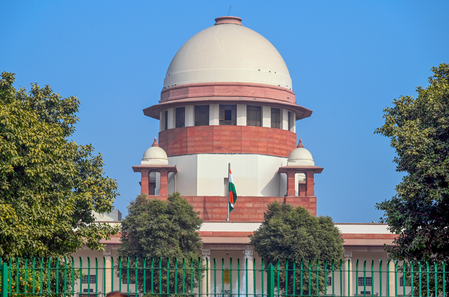
New Delhi, Jan 30 (IANS) The Supreme Court has quashed criminal proceedings against an advocate accused of criminal intimidation in a sexual assault case, holding that vague and belated allegations, coupled with an “improved” statement of the prosecutrix, were insufficient in law to put him on trial.
A Bench of Justices Aravind Kumar and Prasanna B. Varale allowed the appeal filed by Bеri Manoj and set aside an order of the Andhra Pradesh High Court, which had declined to quash the proceedings at the pre-trial stage.
The appellant had been arrayed as accused No. 5 in an FIR registered in 2022 under Sections 328, 376 and 506 of the Indian Penal Code read with Sections 3 and 4 of the Protection of Children from Sexual Offences (POCSO) Act.
In its order, the apex court noted that the “main charge against the appellant” was confined to criminal intimidation under Section 506 IPC.
After examining the case record, the Justice Kumar-led Bench observed that in the prosecutrix’s statement recorded under Section 161 of the Criminal Procedure Code (CrPC), no allegation of any threat was made against the appellant.
It further noted that it was only after seven days, in her statement under Section 164 CrPC, that the appellant’s name surfaced through a general allegation.
“We notice at the initial stage itself that in the statement recorded under Section 161 of the CrPC, the prosecutrix, for reasons best known, has not even whispered of any threat having been posed by the appellant,” the order said.
The apex court said that the later statement amounted to an improvement, reproducing the relevant portion where the prosecutrix alleged that “Chandu Tej’s father, uncle and two aunts came there and threatened me.”
“This contradiction in timing of events creates a serious doubt in the prosecution’s version, or in other words, the appellant’s name suddenly surfaced after seven days through a vague reference to ‘an uncle’ and thereby further weakening the prosecution’s case,” the Justice Kumar-led Bench held.
It reiterated that mere threats, without intention to cause alarm, do not constitute criminal intimidation under Section 506 IPC.
“Even otherwise, mere expression of words, without any intention to cause alarm, cannot amount to criminal intimidation,” the apex court said, adding that the allegation in the Section 164 statement was “insufficient in law to proceed against the appellant”.
It further said that prosecution for criminal intimidation requires a clear intention to cause alarm, irrespective of whether the victim was alarmed or not.
“In the absence thereof, continuation of the prosecution against the appellant by virtue of a vague reference to the expression ‘an uncle’ cannot by itself disclose any offence,” it observed, terming such allegations as “vague” and unsupported by prima facie cogent evidence.
The apex court also took note of the appellant’s professional status, observing that the mere presence of a lawyer in his capacity of discharging professional duty of either giving advice or suggestion cannot amount to intimidation, especially when the foundational facts were conspicuously absent.
Allowing the appeal, the Supreme Court quashed the proceedings insofar as the appellant was concerned, while clarifying that the case would continue against the remaining accused before the jurisdictional trial court.
“Hence, the appeal is allowed. Impugned order is set aside,” the Justice Kumar-led Bench ordered.
–IANS
pds/dan