Radio Brisvaani

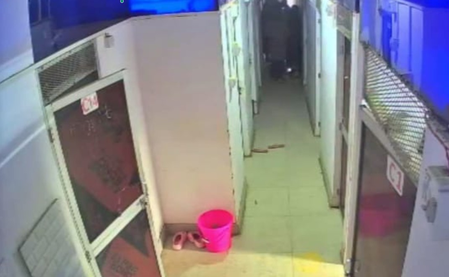
Patna, Feb 2 (IANS) The alleged rape and death of a NEET aspirant at a girls’ hostel in Patna has taken a dramatic turn with the emergence of CCTV footage from Shambhu Girls’ Hostel.
The footage has cast serious doubt on the police’s initial timeline and raised questions about the conduct of the investigation.
The CCTV clip, lasting 10 minutes and 54 seconds, reportedly shows a man carrying the unconscious student out of the hostel amid visible chaos inside the premises. Several female residents are seen running, peeping into corridors and reacting in panic, indicating confusion and urgency at the time. Sources said the footage was recorded when the student was being taken to the hospital.
The student, a resident of Jehanabad district, was staying at the Shambhu Girls’ Hostel in Patna’s Chitraguptnagar area while preparing for the NEET medical entrance examination. She was found unconscious in her room and rushed to a private hospital, where she died during treatment on January 11.
Soon after the incident, the victim’s family alleged sexual assault. However, senior police officials, including station house officer (SHO) Roshni Kumari and Patna Senior Superintendent of Police Kartikeya Sharma, initially ruled out rape, citing the absence of conclusive evidence.
The newly surfaced CCTV footage has now placed the police version under scrutiny. While police had earlier stated that the student was taken to the hospital around 2 p.m. on January 6, the footage reportedly shows activity outside the room beginning at 3.50 p.m. The hostel gate is seen opening at 3.58.55 p.m., and the student being carried out in an unconscious state at 4.01.30 p.m.
This apparent discrepancy of nearly two hours between the official timeline and the visual evidence has raised serious concerns.
The footage has also contradicted the police’s earlier claim that the hostel room door had to be broken open. Instead, it reportedly shows a girl climbing onto a table and unlocking the door from above, suggesting there was no forced entry.
This has raised further questions over whether the room was locked from inside or outside, whether others were aware of the locking mechanism, and whether anyone accessed the room between 9.30 p.m. on January 5 and 4 p.m. on January 6.
No forensic examination of the door latch, locking mechanism, or handle height has been cited so far.
Questions have also been raised about delays in police response. SHO Roshni Kumari reportedly visited the hostel three days after the incident, by which time the crime scene may have been compromised. The room was allegedly not sealed, no entry log was maintained, and the victim’s clothes — crucial evidence in cases of alleged sexual assault — were not seized immediately.
It has also been alleged that instead of the SHO visiting the scene on the first day, a driver was sent.
Further concerns relate to the police’s reliance on the report from Prabhat Hospital, the absence of immediate treatment at Patna Medical College and Hospital (PMCH), and the early projection of a theory involving sleeping pills even before post-mortem findings were available. The case was later transferred to AIIMS after questions were raised over the handling of the medical examination.
The CCTV footage reportedly shows that after the room was opened, several individuals entered — some bringing water and blankets, others appearing to issue instructions.
Despite the student being unconscious, no immediate call to the police or an ambulance is visible in the footage.
Now, a crucial piece of evidence, the CCTV clip, is being seen as a silent witness that challenges not only individual actions but the credibility of the investigation itself.
As legal proceedings continue, the footage has intensified demands for accountability, transparency, and an independent, scientific probe. Public attention remains firmly focused on whether the numerous questions thrown up by the visuals will be conclusively addressed.
–IANS
ajk/skp