Radio Brisvaani

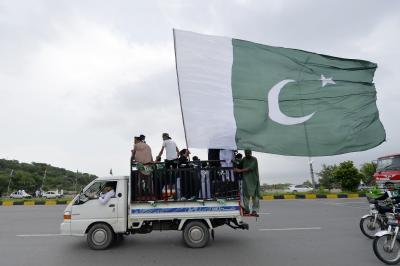
New Delhi, Feb 15 (IANS) Pakistan’s economy cannot be fixed without fixing the politics first, as a corruption-ridden government is coming in the way of economic development, according to an article in the Pakistani media.
An economic system is perforce a product of the political system. The political system is higher in the hierarchy than all the other sub-systems; hence, any malfunction there affects all the constituent sub-systems. The degenerating economic order cannot be viewed in isolation from the political economy. It is a function of the political order, kept in place to support the extraction and rent-seeking, the article observes. The two go hand in hand, the article, written by Sakib Sherani in the leading daily Dawn, said.
“Any entity, be it an elite institution or an elite panel of experts, talking about ‘deep’ economic reform while ignoring or implicitly ruling out reforming the corrupt and misgoverning political order is fooling itself and us. The bottom line is that economic reform requires political reform,” it observed.
The article highlights that genuine fresh investment that brings about innovation and efficiency, and improves the country’s overall competitiveness, will remain a pipe dream until the extractive, rent-seeking political order that shapes and produces the underlying current economic order is cast aside.
Sherani, a member of several past economic advisory councils of Pakistan, trashes the concept being propagated by an elite panel that “creative destruction” of companies would lead to economic growth.
He pointed out that at the core of the elite policy recommendations is the implicit assumption that the inefficiency and lack of competitiveness in the economy are all internal to the way firms choose to operate, inherent in their business decisions, and independent of external factors. The assumption is that firms have agency over their environment, or that the environment in which they operate is neutral and does not exert any negative influence.
“This is obviously a heroic assumption in the case of Pakistan. And completely off the mark. Formal sector firms in the country operate under the following under dizzying set of constraints such as the most expensive electricity in the region (with frequent interruptions); the highest tax burden (up to 50 per cent plus with the super tax); an over-valued exchange rate; widespread smuggling and under-invoicing that produces a $68 billion supposedly underground (but very much above-ground) parallel economy that undercuts the formal economy,” he wrote in the article.
Besides the executive overreach and regulatory burden, there is the cost of corruption and bribes, non-availability of a skilled workforce, training costs for an unskilled and semi-skilled labour force, the product of chronic under-investment by the state, paying for water, security, extortion by local criminal gangs, forced hiring of political appointees, and dealing with frequent policy reversals. This set of constraints is not even exhaustive, the article added.
–IANS
sps/vd