Radio Brisvaani

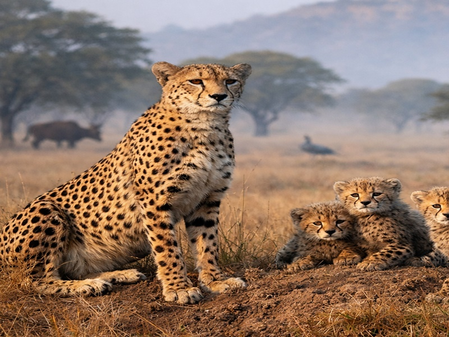
Bhopal, Feb 21 (IANS) The Madhya Pradesh government on Saturday said the successful reintroduction of cheetahs at Kuno National Park reflects significant progress in India’s wildlife conservation efforts and indicates that the species is gradually becoming an integral part of the country’s forest ecosystem once again.
According to a state government press note, the survival of breeding females, growth of second-generation cubs, and gradual expansion into new habitats point to encouraging outcomes under the cheetah reintroduction programme.
The government said the birth of second-generation cubs in Kuno National Park and Gandhi Sagar Wildlife Sanctuary marks an important milestone in the implementation of Project Cheetah.
“Despite some cheetah deaths due to natural causes and adaptation-related challenges during the initial years, the surviving animals have successfully adapted to Indian climatic conditions, prey availability, and ecological surroundings. This indicates steady progress towards long-term sustainability of the project,” the government said.
The government said female cheetah Gamini has recently given birth to her second litter. From her earlier litter, three sub-adult cubs are reported to be healthy, and three new cubs have been born.
Another female cheetah, Veera, is currently roaming in open forest areas with her 13-month-old cub, while Nirva and her three 10-month-old cubs are being monitored in a protected enclosure.
Of the eight cheetahs translocated from Namibia, three are currently present in Kuno National Park and are reported to be healthy. Twelve cubs born to Namibian-origin cheetahs are also alive.
Between 2023 and 2026, a total of 39 cubs were born at Kuno, of which 27 are currently alive, according to the government.
Of the 12 cheetahs translocated from South Africa, eight are currently present in Kuno and have adapted to the habitat. Three have been translocated to Gandhi Sagar Wildlife Sanctuary. Ten cubs born to South African-origin cheetahs are currently alive.
The government also said that Mukhi, the first cheetah born in India under the project to reach adulthood, has given birth to five cubs, marking a significant development in the programme.
According to the government, Project Cheetah has also contributed to increased public participation in wildlife conservation.
“More than 450 ‘Cheetah Mitras’ have been trained to support conservation efforts, and employment opportunities have been generated, contributing to local livelihoods and community participation,” the government said.
The government aims to establish a self-sustaining population of 60 to 70 cheetahs across nearly 17,000 square kilometres by 2032. As part of this plan, a conservation breeding centre is proposed to be set up in the Banni grasslands of Gujarat.
–IANS
pd/pgh