Radio Brisvaani

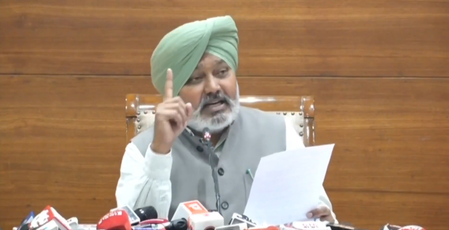
Chandigarh, Feb 23 (IANS) Projecting excise revenue of Rs 12,800 crore for 2026-27, Punjab Finance Minister Harpal Cheema on Monday said the state’s excise reforms are now directly strengthening public welfare by funding schools, hospitals, and other pro-people schemes.
Announcing the new excise policy, Cheema said the state has moved decisively away from the stagnation of previous Congress and Akali-BJP governments, transforming excise into a transparent, enforcement-driven and growth-oriented sector that is delivering record collections while tightening the noose around illicit trade.
Presenting a detailed comparative analysis of the state’s excise trajectory, he said during the SAD-BJP regime in 2011-12, excise revenue stood at a modest Rs 2,755 crore.
Over the subsequent decade, growth remained slow, and it reached only Rs 6,255 crore during the Congress regime in 2021-22.
“However, following the implementation of a more robust policy framework in 2022-23 by the Bhagwant Mann-led government, the state witnessed an immediate and massive leap to Rs 8,428 crore. This momentum has continued unabated, with revenue climbing to Rs 10,744 crore in the 2024-25 and meeting the current target of Rs 11,200 crore for 2025-26.”
Detailing key provisions of the new excise policy, he said: “The Punjab government has introduced several measures to streamline operations and support existing businesses. A primary feature includes the renewal of current retail licences at a 6.5 per cent increase over the 2025-26 fees. In cases where groups are not renewed, the allotment will be handled through a transparent e-tender process.”
“The quota for Punjab medium liquor at 50 and 65 degrees has been increased by three per cent, bringing the total to 8.79 crore proof litres to meet consumer demand while regulating the market. Furthermore, to combat the sale of illicit alcohol, the government will introduce 40-degree PML sub-vends specifically in areas identified as high-crime zones under the Excise Act.”
The minister announced that Punjab will now host its own malt manufacturing units. “This strategic initiative signals a sophisticated evolution in the state’s industrial policy, transitioning Punjab from a downstream bottling-centric economy to a high-value manufacturing hub,” he added.
–IANS
vg/vd