Radio Brisvaani

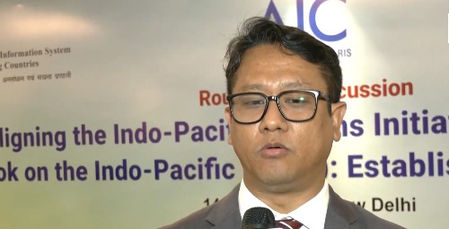
New Delhi, March 14 (IANS) The global energy landscape is becoming increasingly influenced by geopolitical tensions, with supply chains, trade routes and energy markets facing growing uncertainties, experts said on Saturday at a roundtable discussion on the Indo-Pacific held in the national capital.
Senior Research Fellow at the Centre for Geopolitics and Strategic Studies at the Chintan Research Foundation, Monish Tourangbam, said that interdependence between countries is increasingly being used as a strategic tool.
“Definitely, we have also faced a lot of challenges. Interdependence has, to some extent, been weaponised. You can see this in the imposition of tariffs from the US. Additionally, energy demand and supply have become, in a way, beholden to geopolitics. For instance, the dynamics between the US and India regarding Russian energy illustrate this. You can see that these issues are highly interconnected,” Tourangbam told IANS.
Highlighting the vulnerability of global energy routes, Hyderabad-based Politeia Research Foundation Chairperson, Sanjay Pulipaka, said the Strait of Hormuz has emerged as a critical point in the ongoing geopolitical crisis affecting energy supplies.
“Let me, at the outset, congratulate Research and Information System for Developing Countries for organising this wonderful roundtable discussion on the Indo-Pacific. We have discussed many interesting ideas here. One important issue that we need to keep track of is what is happening at the Strait of Hormuz. Today, the Strait of Hormuz has emerged as a bottleneck for energy flows. Of course, the Indian government is doing all it can to ensure relatively easy flow of energy from the Strait of Hormuz,” Pulipaka told IANS.
The remarks come at a time when the global market is under intense pressure following escalating tensions between the US and Iran, which intensified into an open conflict in late February.
The crisis deepened after joint US and Israeli strikes on Iranian targets reportedly began on February 28, killing Iran’s Supreme Leader Ayatollah Ali Khamenei.
The conflict has severely disrupted global oil markets, creating one of the most serious supply shocks in recent decades.
A major factor has been the Strait of Hormuz, a crucial maritime passage through which around 20 per cent of the world’s daily oil supply and a similar proportion of liquified natural gas normally pass.
At the same time, production and exports from several regional oil producers, including Saudi Arabia, the United Arab Emirates, Iraq and Kuwait, have been affected by precautionary shutdowns or reduced output.
Amid the disruption, Iran has now granted safe passage to Indian-flagged vessels through the Strait of Hormuz despite wider restrictions on global shipping, and an LPG tanker sailing to India crossed the Strait of Hormuz on Friday.
The development follows a series of high-level diplomatic engagements between India and Iran, including phone conversations between External Affairs Minister S. Jaishankar and Iranian Foreign Minister Abbas Araghchi.
Prime Minister Narendra Modi also spoke with Iranian President Masoud Pezeshkian on Thursday to review the rapidly evolving situation in the West Asia region.
–IANS
sn/khz