Radio Brisvaani

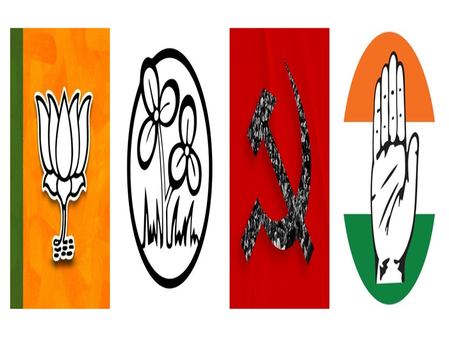
Kolkata, March 14 (IANS) In West Bengal, days before the schedule for the Assembly election is announced, the battle lines appear clear, with the ruling Trinamool Congress and the state’s principal Opposition, the Bharatiya Janata Party (BJP), in a direct contest for power, while the Left and the Congress are looking at improving their respective vote shares.
When the Trinamool first came to power in 2011, it won 184 seats in the state Assembly, which has a total strength of 294, with a mandate of over 1.85 crore votes and a vote share of about 39 per cent. The main constituent of the Left Front it dethroned — the CPI-M — won only 40 seats, securing more than 1.43 crore votes and a 30 per cent vote share.
The Congress, which had been reduced to the margins of the state’s political landscape over time, contested in alliance with the Trinamool, winning 42 seats with about 43 lakh votes and a nine per cent share.
At that time, the BJP failed to win a single seat, polling about 19.3 lakh votes and securing a four per cent vote share.
Contesting on its own in the subsequent Assembly election, the Mamata Banerjee-led party captured 211 seats in 2016, with over 2.45 crore votes and close to a 45 per cent vote share.
The Communist Party of India-Marxist(CPI-M) slipped to 26 seats, securing about 1.08 crore votes and close to a 20 per cent vote share, while the BJP won three seats, polling around 55 lakh votes and securing around a 10 per cent vote share.
The Congress managed to add two more seats to its earlier tally and secured about 67 lakh votes and roughly a 12 per cent vote share.
Post-poll analysis of the performance of what was called the “Mahajot” or Grand Alliance between the Left Front and the Congress suggested that supporters of the communists largely voted in favour of the ally in a bid to remain politically relevant.
However, many Congress supporters reportedly did not reciprocate, citing 34 years of “CPI-M repression”.
In a dramatic turn of events in the 2021 Assembly election, both the Congress and the Left Front failed to win a single seat. For the first time in West Bengal’s electoral history, the two former ruling blocs failed to send any representative to the state’s Legislative Assembly.
In a major development, the BJP emerged as the principal Opposition, winning 77 seats, securing a comparatively large mandate of 2.29 crore votes and about a 38 per cent vote share.
The Assembly also had its first Leader of Opposition from the BJP benches in Suvendu Adhikari.
The Mahajot failed to revive its fortunes, with the Congress eventually parting ways months before the upcoming state polls.
Simple arithmetic suggests that with further division in non-BJP votes and the Trinamool being the major player in that space, the two former allies face a difficult electoral challenge.
According to a senior Congress leader, both parties are primarily aiming to increase their respective vote shares this time.
In 2021, while the CPI-M managed a vote share of less than five per cent, the Congress just managed to cross three per cent.
By going to the polls on their own, the two parties expect an increase of “at least one to 1.5, or a maximum of two” percentage points each.
The leader also said that by contesting independently, the Congress hopes to regain the support of its voters who had shifted towards the Trinamool rather than backing its earlier ally, the Left Front.
For the CPI-M, the focus is on consolidating its vote share with support from sections of its cadres who had voted for the BJP instead of supporting the Congress or the Trinamool.
For the two parties that once dominated the political arena in West Bengal, their leaders admit privately that they now face a challenging situation, with even a modest increase in vote share being seen as a significant outcome.
–IANS
jb/pgh