Radio Brisvaani

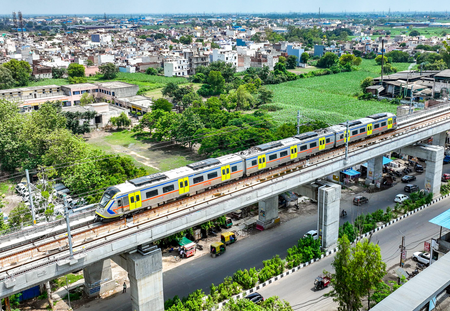
New Delhi, March 15 (IANS) Over the past eleven years, India has witnessed a remarkable expansion of its metro rail network, making it the third largest in the world.
From just a handful of operational lines in five cities in 2014, the network has grown to cover as many as 26 cities, crossing the milestone of 1,000 kilometres of metro network. This expansion has transformed the way people travel in cities, offering faster, cleaner, and more reliable journeys and reduced costs while also easing congestion on roads, according to an official factsheet released on Sunday.
The government’s big push to urban transport has covered 38 metro rail projects covering 1,051 km, which have been sanctioned with an estimated cost of Rs 3.44 lakh crore since 2014. The annual metro budget jumped from Rs 5,798 crore in 2013–14 to Rs 29,550 crore in 2025–26.
Metro Rail lowers household transport costs and contributes to a healthier environment. More than just a mode of travel, metro investments have become engines of growth – supporting jobs, improving access to education and healthcare and enhancing the overall well‑being of families across India’s rapidly growing cities, the statement said.
According to a study by the Economic Advisory Council to the Prime Minister (EAC‑PM), there have been wider economic and social benefits of metro development, from financial stability to sustainable urban growth.
Metro connectivity reduces transport costs, which lowers loan repayment delays and increases early repayment of home loans. In Delhi, missed payments have declined by 4.42 per cent, with early repayments of mortgages went up by 1.38 per cent while in In Bengaluru, loan repayment delays fell by 2.4 per cent, whereas early home loan repayments rose by 3.5 per cent while in Hyderabad, for instance, missed payments on home loans have fallen by 1.7 per cent, while early repayments have risen by 1.8 per cent, the study states.
Metro services today operate in major cities such as Delhi & NCR, Mumbai, Bengaluru, Kolkata, Hyderabad, Chennai, Lucknow, Pune, Ahmedabad and many others. In April 2023, Kerala’s Kochi became the first city in India to introduce a Water Metro. The system connects 10 islands using electric‑hybrid boats, offering seamless, eco‑friendly transport and setting a benchmark for sustainable urban mobility.
India’s metro and Namo Bharat Regional Rapid Transit System (RRTS) projects have witnessed remarkable progress, bringing in world‑class technologies that strengthen safety, boost efficiency and advance sustainability.
For the first time in the world, Namo Bharat trains on the Delhi–Meerut RRTS corridor are using a Hybrid level-III radio‑based signalling system on a Long Term Evolution (LTE) backbone. This advanced technology makes train operations smarter and safer, giving passengers a new level of security and confidence in their journey.
–IANS
sps/vd