Radio Brisvaani

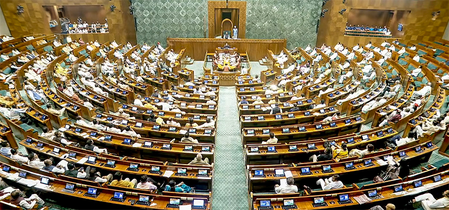
New Delhi, March 18 (IANS) Lok Sabha took up voting on the Demands for Grants for the Ministry of Agriculture and Farmers Welfare for the financial year 2026-27 on Wednesday.
The Ministry has been allocated Rs 1,40,529 crore in the Union Budget, reflecting a 5.4 per cent increase over the revised estimates of 2025-26.
Nearly 93 per cent of this allocation is directed to the Department of Agriculture and Farmers Welfare, which oversees farmer-centric schemes, subsidies, crop insurance, and welfare initiatives. The remaining 7 per cent is earmarked for the Department of Agricultural Research and Education to strengthen research, extension services, and agricultural education.
During the debate, members of Parliament from across the political spectrum emphasised priorities such as boosting agricultural productivity, ensuring fair prices for farmers, expanding irrigation networks, promoting sustainable practices, and improving access to rural credit.
They also flagged challenges, including climate resilience, market linkages, and the need for technological innovation to raise farm incomes. Cut motions, where opposition members propose reductions or highlight grievances, were considered as part of the process.
The approval of these demands formally authorises the government to implement schemes under the Ministry, underscoring Parliament’s role in exercising financial oversight over one of India’s most vital sectors– agriculture, which sustains millions of livelihoods and underpins food security and economic stability.
The day’s proceedings also included discussion of reports presented by the Standing Committee on Health and Family Welfare, covering policy oversight and budgetary aspects of health and family welfare programmes.
Subsequently, the House considered a motion on the report of the Joint Committee regarding the Constitution (129th Amendment) Bill, 2024, alongside deliberations on the Union Territories Laws (Amendment) Bill, 2024.
Together, these debates and votes formed part of the ongoing Budget Session, where financial allocations and legislative reports remain central to governance and sectoral development.
–IANS
sktr/dpb