Radio Brisvaani

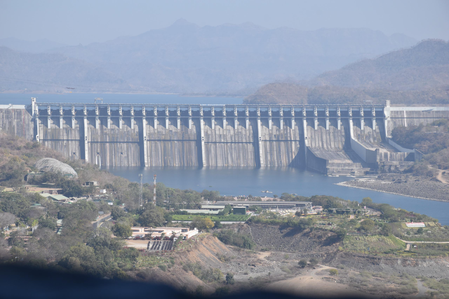
Ekta Nagar (Gujarat), March 21 (IANS) In view of World Water Day on March 22, fresh data related to the Sardar Sarovar Narmada Dam showcases its pivotal role in providing water, energy, and irrigation across Gujarat and Rajasthan.
The multipurpose project, built on the Narmada River at Ekta Nagar in Gujarat’s Narmada district, now serves over 3 crore people with drinking water, irrigates nearly 20 lakh hectares of farmland, and generates more than 69,000 million units of electricity to date.
“The Sardar Sarovar Dam has fundamentally transformed water management in Gujarat. It ensures reliable irrigation, drinking water supply, and renewable energy, benefitting millions of residents and farmers,” officials said.
According to official figures, the project provides irrigation to 17.92 lakh hectares in Gujarat and 2.46 lakh hectares in Rajasthan.
This has enabled farmers to diversify crops, with significant increases in wheat, cotton, cumin, sesame, peanuts, vegetables, and fruit cultivation.
Over 13 lakh farming families directly benefit from the irrigation system, increasing rural incomes and productivity.
Drinking water data shows the dam supplies 10,453 villages and 190 towns in Gujarat, as well as 1,336 villages and three towns in Rajasthan.
Previously, residents in areas such as Saurashtra and Kutch had to travel long distances for water, particularly women.
Pipelines now deliver water directly to homes, improving health and sanitation standards across communities.
The Sardar Sarovar Project features one of the world’s largest lined irrigation canal networks, stretching 458 kilometres in the main canal and feeding 38 branch canals.
The entire system covers more than 70,000 kilometres of canals, reaching 17 districts, 77 talukas, and thousands of villages.
The dam’s installed power capacity is 1,450 MW, with River Bed and Canal Head Power Houses generating more than 69,000 million units of electricity to date.
Additionally, 18 small hydropower plants along the canals provide 85.46 MW, while solar installations on canal tops and banks contribute 35 MW of renewable energy. Environmental measures have accompanied the development.
For each tree submerged by the reservoir, 67 trees have been planted. The Shoolpaneshwar Sanctuary has been expanded to around 607 square kilometres, supporting biodiversity in the region.
Tourism around the dam, particularly the nearby Statue of Unity, attracts millions annually, creating employment opportunities for local communities.
The data from Sardar Sarovar demonstrates that strategic infrastructure projects can simultaneously support agriculture, drinking water, energy generation, environmental protection, and regional development.
–IANS
mys/uk