
Radio Brisvaani

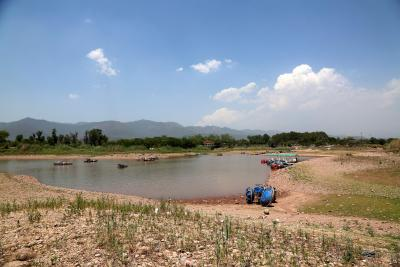
Islamabad, March 22 (IANS) Pakistan is one of the most climate-vulnerable nations in the world, with climate change posing an existential threat to its agriculture and food chain, according to the Pakistan Economic Survey 2024-25 and recent World Bank assessments, and the crisis is devastating its rivers, coasts, livestock and crops, threatening food security and livelihoods, as per a report in the local media.
“While Pakistan has long viewed climate change through the lens of sudden disasters like the 2022 floods, the reality is a permanent disruption of the nation’s survival systems. For a country where 60 per cent of the population lives in rural areas, and the agriculture sector contributes 21.9 per cent to the GDP, these shifting decimals are a matter of life and death,” The Friday Times report stated.
During the 2024-25 fiscal year, there was a reduction in major crops like wheat, maize, and cotton. This contraction was caused by environmental changes, including early-season heat stress that reduced wheat output by 8.9 per cent and untimely monsoon rains that caused a decline in cotton production by 30 per cent. The World Bank has warned that such climate-driven shocks could reduce Pakistan’s annual GDP by 18 to 20 per cent by 2050 if significant measures are not taken, leading to millions of people facing poverty and food insecurity.
Frequent disasters like the floods in 2025 caused damage to the agriculture sector worth Pakistani Rupees (PKR) 430 billion. Currently, around 10 million people in Pakistan are facing acute food insecurity. Furthermore, Pakistan’s glaciers are melting at a fast pace, threatening the long-term stability of the Indus Basin, which provides the lifeline for nearly 90 per cent of the country’s food production.
“Along the Makran coast, the sand is no longer just a bed for the tides; it has become a graveyard of salt-crusted shells and bleached coral. In the laboratories of the University of Makran, Dr Imtiaz Kashani, a 35-year-old marine biologist, tracks the collapse from a different vantage point. His research, published in journals like Oceanologia, reveals that the biggest threat to Pakistan’s coastline is not just the heat, but the unpredictable rainfall patterns affecting the Northern Arabian Sea,” The Friday Times report said.
The livestock sector, which sustains 14.6 per cent of Pakistan’s GDP, is also facing the implications of climate change. If a cow dies due to heat, it not only affects food but also destroys the family’s primary income. Over a million animals were killed in the floods in Pakistan in 2022; however, the survivors are battling a slow death from heat stress and fodder shortage.
The production of honey in Pakistan has reduced by 15 per cent since 2022, according to the Pakistan Agricultural Research Council and recent findings from the Honey Bee Research Institute in Islamabad. The different types of honey produced in Pakistan have reduced from 22 to 11, according to the report.
“Earlier we used to collect fish in maunds; now it is in kilograms,” the report quoted 35-year-old Muhammad Asif, an individual whose family has navigated the waters of the Indus and the Arabian Sea for generations. He mentioned that the rivers stayed full earlier and their income was higher; however, now the rivers stay dry. The story of Pakistan’s food security is not about surviving the next drought or flood, but it is about a permanent shift from sustenance to a state of constant, precarious survival, according to the report.
“As Dr Kashani notes, the impact travels from the primary producer to the tertiary consumer, ultimately affecting the entire nation’s plate. For people like Muhammad Asif, the sea and the rivers were once a source of pride and prosperity. Today, they are a landscape of scarcity where the water is bitter, the heat is lethal, and the silence in the villages is growing louder. The data confirms the testimonies.”
“According to the Pakistan Economic Survey 2024-25, released by the Government of Pakistan’s Finance Division, wheat output fell by 8.9 per cent to 28.98 million tonnes in FY2025 due to early-season heat stress and post-sowing dry spells, showing the staple of the Pakistani diet is as vulnerable as the fish in the sea. The country stands at a threshold where every lost bee, every sick cow, and every empty fishing net is a warning,” it added.
–IANS
akl/vd