Radio Brisvaani

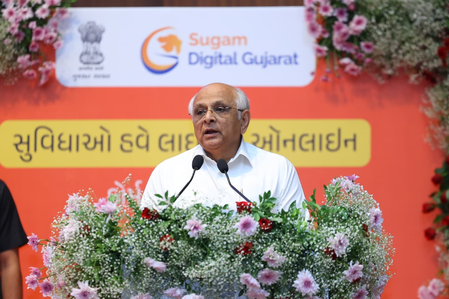
Gandhinagar, March 24 (IANS) Gujarat Chief Minister Bhupendra Patel on Tuesday termed the passage of the Uniform Civil Code (UCC) Bill 2026 by the state Assembly a “historic moment” for Gujarat and the country.
The passage followed a debate lasting more than seven and a half hours, which ended with the legislation approved by a majority.
“I extend my congratulations to all public representatives of the state and all citizens on the passage of the Uniform Civil Code Bill. This is a historic moment for Gujarat and the country,” Patel said in the House, adding that Gujarat had become the second state in India (after Uttarakhand) to implement the UCC.
He said the law would provide a uniform legal framework across religions and communities for matters of marriage, divorce, inheritance, and adoption.
“It will ensure that women of all religions and communities receive equal rights, thereby strengthening their dignity and security,” he said.
Addressing concerns over cultural implications, Patel said, “This Bill is not to erase any culture, and tribal culture will not be harmed.”
He added that all aspects had been discussed in detail before bringing the legislation, and that it includes provisions for justice for women and children.
As he introduced the Bill, members of the Treasury benches raised slogans in support.
“The state’s geographical and cultural diversity had been taken into account to ensure that no community faces injustice,” he noted.
A high-level committee, chaired by retired Supreme Court judge Ranjana Desai, conducted a detailed study and submitted its final report to the government on March 17, following extensive consultations and public outreach across districts.
During the debate, Deputy Chief Minister Harsh Sanghavi said the committee had received nearly 20 lakh suggestions from the public through post, email, web portals and in-person consultations.
“49 per cent of the responses, or about 9.72 lakh, were received via email, and 5.5 per cent, or about 1.09 lakh, through the web portal,” he said.
He added that a majority supported uniform provisions, including 81 per cent in favour of common marriage laws, 79 per cent in favour of uniform divorce rules, 83 per cent in favour of equal property rights and maintenance provisions, and 86 per cent in favour of mandatory registration of divorce.
The Bill makes it compulsory to register marriages within 60 days, with a penalty of up to Rs 10,000 for failure to comply.
It also prescribes punishment of up to seven years’ imprisonment in cases where a marriage is carried out through coercion, intimidation or fraud, as well as in instances of bigamy, with mandatory registration aimed at ensuring legal recognition, safeguarding the rights of women and children, and preventing fraudulent unions through accurate marital status records.
In matters of divorce, the legislation mandates that only divorces granted through a court and duly registered will be considered valid, with violations attracting a penalty of up to three years’ imprisonment.
It also guarantees women the unconditional right to remarry following a legally recognised divorce, while establishing a uniform set of grounds and procedures across communities to ensure gender equality, simplify legal processes and reduce disputes.
The proposed Code introduces uniform maintenance provisions applicable to all religions and provides equal inheritance rights, granting sons and daughters the same legal standing across communities, thereby strengthening women’s financial security and promoting a more equitable social structure.
Additionally, the Bill regulates live-in relationships by making their registration mandatory, with failure to comply attracting a fine of up to Rs 10,000 or imprisonment of up to 3 months.
In cases where individuals entering such relationships are between 18 and 21 years of age, their parents will be informed.
The legislation also provides penalties in cases involving coercion, intimidation or fraud, applies provisions of the Protection of Children from Sexual Offences (POCSO) Act in cases involving minors, and penalises individuals entering into live-in relationships despite being legally married.
Clarifying exemptions, Patel said certain customary practices in minority communities, including marriages among specific relatives, would not be affected by the law, while Scheduled Tribes have been kept outside the ambit of the code in line with the committee’s recommendations to protect their traditional customs.
–IANS
mys/dan