Radio Brisvaani

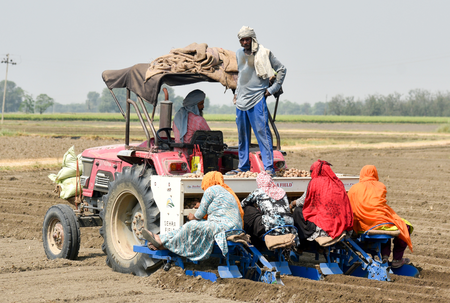
New Delhi, March 27 (IANS) The Labour Force Participation Rate (LFPR) in persons of age 15 years and above was observed as 59.3 per cent during 2025 and remained stable compared to 2024, according to data released by the Ministry of Statistics on Friday.
The LFPR for males and females stood at 79.1 per cent and 40.0 per cent, respectively, in 2025.
According to the data, the worker population ratio (WPR) was estimated as 57.4 per cent during 2025, remaining almost at the same level as in 2024. Last month, the WPR for males and females was 76.6 per cent and 38.8 per cent, respectively.
Unemployment rate among urban females witnessed a decline to 6.4 per cent in 2025 from 6.7 per cent in 2024.
Meanwhile, the proportion of workers in regular wage/salaried employment increased to 23.6 per cent in 2025 compared to 22.4 per cent in 2024.
The rural male labour force participation remained strong at 80.5 per cent while rural female participation held steady at 45.9 per cent, sustaining the gains achieved in previous years.
The female unemployment rate remained low at 2.1 per cent, lower than the male UR in rural areas, which stood at 2.6 per cent. The male and female unemployment eased to 4.2 per cent and 6.4 per cent, respectively, in urban areas.
Both male and female labour force participation rates in 2025 remained broadly consistent with the levels observed in 2024 in urban areas, the data showed.
Meanwhile, the WPR showed a broad stability in 2025 compared with 2024.
In 2025, WPR for rural males remained robust at 78.4 per cent, while WPR for rural females held steady at 44.9 per cent, sustaining the significant gains made since 2022. The overall urban WPR remained nearly at 50.0 per cent.
“Among males, 69.8 per cent reported wanting to continue studies as the main reason for not being in the labour force, whereas among females, 44.4 per cent cited child care/personal commitments in homemaking as the main reason,” the findings showed.
Among males aged 15 years and above, about 82.7 per cent of those with a diploma/certificate, 79.1 per cent of those with a graduation and 83.1 per cent of those with post-graduation and above as their highest level of education were in the workforce.
“Urban self-employed males worked about 17.5 hours more per week than their female counterpart, while in rural areas the difference was around 12.3 hours per week. In regular wage/salaried employment and casual labour, males worked approximately 7.9 hours and 6.9 hours more per week, respectively, than females,” the data showed.
–IANS
na/vd