Radio Brisvaani

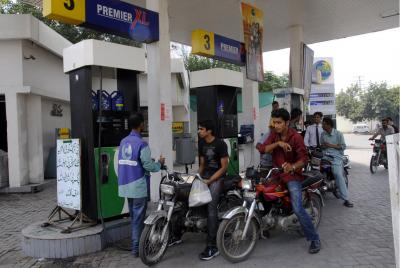
New Delhi, April 11 (IANS) As geopolitical tensions rise following Israel’s attack on Lebanon’s Hezbollah, Pakistan’s already fragile economy is facing added pressure, with rising fuel prices rippling across the broader economy, driving up the cost of essential goods and straining households, a report has said.
According to a Business Recorder report, fuel price adjustments — typically driven by global crude oil trends, exchange rate movements and fiscal pressures — have had a more pronounced impact in Pakistan due to structural weaknesses and limited regulatory oversight.
It further stated that fuel is a key input across sectors, and any increase in prices quickly feeds into transportation costs, which, in turn, raises the prices of food and other essential commodities. As supply chains become more expensive, the burden is passed on to consumers, amplifying inflationary pressures.
“In Pakistan’s case, fuel price increases do not remain confined to energy costs — they cascade through the entire economy,” the report said.
The situation is further exacerbated by loosely regulated markets, where intermediaries often pass on higher costs while adding margins, leading to price increases that exceed the actual impact of fuel hikes.
The report also highlighted the role of ‘psychological inflation’, where expectations of rising costs prompt businesses to increase prices in advance, compounding the effect on consumers.
For households, particularly those with limited incomes and savings, the cumulative impact is significant. Rising fuel costs translate into higher daily expenses, reduced purchasing power and growing uncertainty over future spending.
Pakistan’s fiscal constraints, including commitments linked to International Monetary Fund (IMF) programmes, have limited the government’s ability to absorb price shocks through subsidies, making such adjustments unavoidable.
However, concerns remain over policy consistency, with abrupt price revisions and occasional reversals adding to market uncertainty. According to the report, clearer communication and predictable pricing mechanisms could help moderate the wider economic impact.
Until then, fuel price shocks are likely to continue reverberating across Pakistan’s economy, intensifying inflationary pressures and deepening the strain on households.
–IANS
ag/na