Radio Brisvaani

New Delhi, April 16 (IANS) The Faridabad module case linked to the Delhi car bomb blast in November last year has served as a stark wake-up call for Indian security agencies. While several white-collar modules have been uncovered in the past, the Faridabad network operated on a far larger and more organised scale.
An Intelligence Bureau official said that emerging patterns point to a growing preference among terror groups for white-collar operatives, indicating a shift in recruitment and operational strategy.
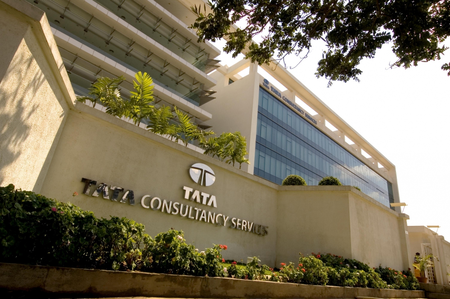
The Tata Consultancy Services case in Maharashtra’s Nashik also falls within the ambit of such modules. Unlike the Faridabad network, which was geared towards executing attacks across Delhi and other parts of North India, the Nashik module focused primarily on conversion and radicalisation.
In Faridabad, the network was led by medical professionals, whereas in Nashik it comprised IT professionals and an HR manager, reflecting the changing profile of those involved.
“While such modules are eventually detected, their professional backgrounds often delay suspicion, allowing them to function undetected for extended periods,” the officials said.
Both the Nashik and Faridabad modules are believed to have remained active for three to four years. By the time they are uncovered, considerable damage has often been done, underlining the need for a reassessment of current strategies to counter this evolving threat.
Officials indicate that terror groups are likely to place greater emphasis on white-collar operatives for both terror activity and radicalisation efforts. Such individuals often require only minimal prompting, as they can access methods and instructions online and act independently.
Their familiarity with encrypted platforms and secure communication channels further enhances their ability to operate discreetly.
In the Faridabad case, members relied on ghost SIM cards and encrypted applications. In Nashik, the group used dedicated WhatsApp groups to circulate material and identify targets.
“Organisations such as the Islamic State and Al-Qaeda may limit their role to providing initial direction while encouraging these modules to sustain themselves over time. These networks may focus either on radicalisation or on carrying out attacks,” an official said.
While recent crackdowns have brought these operations into sharper focus, officials note that Pakistan-based terror groups have long invested in developing networks involving white-collar operatives. The ISI has, in the past, targeted schools and colleges in Jammu and Kashmir and other parts of the country as part of this effort.
Officials say the investment is aimed at encouraging radicalisation at the school and college level. By the time these individuals complete their education, they can form networks focused on both radicalisation and potential terror activity. While the involvement of medical professionals came into focus after the Faridabad module was exposed, officials note that such efforts have long been part of an ISI-backed approach.
Funding support has reportedly been extended to select individuals for their education. Instead of being sent to Pakistan, many were encouraged to pursue engineering or medical studies in Turkey and parts of Europe.
Officials believe such locations offer greater scope for targeted indoctrination while also keeping these individuals away from the scrutiny of Indian agencies. On returning, they are expected to influence others and draw more youth into similar networks. There are indications that both the ISI and groups such as the Islamic State may continue to place emphasis on this model.
Agencies are examining possible links between the modules that have been uncovered so far. However, one official pointed out that many of these networks may function independently, which allows them to operate longer with a lower risk of detection.
“For the ISI”, officials say, “the priority appears to be the expansion in number rather than direct coordination between modules.”
–IANS
vn/snj/skp