Radio Brisvaani

New Delhi, April 24 (IANS) In the high-profile murder of an IRS officer’s daughter in Southeast Delhi, the Delhi Police are set to conduct a psychological analysis of the accused as part of their ongoing investigation. Sources indicate that this assessment aims to evaluate the suspect’s mental state, behavioural patterns, and potential motives.
The decision follows reports that the accused displayed an unusual calmness and a total lack of remorse during interrogation. The analysis will likely include a clinical evaluation by experts to assess aggression levels and emotional responses.
Investigators are particularly interested in identifying traits linked to Antisocial Personality Disorder to determine whether the crime was a premeditated act or a result of impulsive rage. Further investigation in the case is underway.
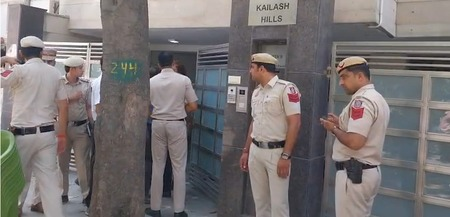
The incident occurred on Wednesday morning at the bureaucrat’s residence in the Kailash Hills locality. Preliminary findings suggest the victim, a 22-year-old student, was in her room when the accused, identified as Rahul Meena, entered the premises.
When questioned about his presence, Meena allegedly lied, claiming the victim’s mother had invited him inside. The confrontation escalated when Meena demanded cash urgently.
When the victim refused, a heated argument ensued. As the victim began to scream for help, Meena reportedly lost control and, in a fit of rage, struck her repeatedly in the face with a lamp, causing severe bruising and head injuries.
Once the victim was rendered unconscious, the accused allegedly raped her. He then dragged her body to a room containing the family’s lockers. In a chilling display of calculation, he used the unconscious victim’s finger to bypass a fingerprint-secured locker and utilised a screwdriver to force open a second safe.
After looting approximately 2.5 lakh in cash and jewellery, Meena discovered his trousers were stained with blood. He subsequently changed into a pair of trousers belonging to the victim’s brother before fleeing the scene towards the railway station.
The timeline of the crime was established through CCTV footage, which captured Meena entering the colony at 6:30 A.M. and entering the house nine minutes later. He was seen leaving the premises at approximately 7:20 A.M., having spent less than an hour inside.
Despite his attempts to evade capture, the Delhi Police arrested Meena at a hotel in Dwarka using three critical digital clues. Investigators discovered he had avoided using his personal device, instead using a handset he had stolen during a prior harassment incident in Alwar.
Law enforcement tracked his location further after he accessed the Internet through the Dwarka hotel’s Wi-Fi network. During this time, Meena remained in contact with a relative in Gurugram via Instagram. By analysing Internet Protocol Detail Records (IPDR) and employing advanced digital surveillance, police pinpointed his exact location, while questioning the relative provided the final inputs needed to execute the arrest.
The investigation has further revealed that after the physical assault and rape, Meena strangled the victim with a phone charger to ensure she could not identify him. While the stolen valuables and forensic evidence including the blood-stained clothing and CCTV logs — provide a strong technical case, the psychological profiling is expected to be a cornerstone of the prosecution’s effort to establish the gravity of the intent.
–IANS
jk/rad