Radio Brisvaani

Thiruvananthapuram April 27 (IANS) Kerala has moved to formalise power restrictions amid an unprecedented surge in electricity demand, with peak load management now effectively translating into scheduled, short-duration outages across parts of the state.
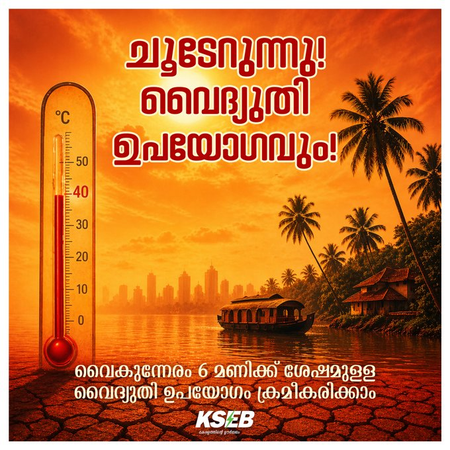
The Kerala State Electricity Board (KSEB) is all set to regulate power supply for 15 to 30 minutes in select areas, particularly during peak evening hours between 6 p.m. and 11 p.m., with advance intimation via SMS wherever feasible.
The decision follows mounting public anger over frequent, unannounced nighttime disruptions that had already become routine.
Officials acknowledged that demand has far exceeded projections, putting severe strain on the transmission and distribution network and leading to voltage drops in some regions.
The spike has been driven by an intense summer and a shift in household energy use.
A cooking gas shortage linked to geopolitical tensions in West Asia has pushed more consumers towards electricity-based alternatives, especially induction cookers.
Combined with increased use of cooling appliances, this has sent consumption soaring.
Data from KSEB underscores the scale of the crisis.
On April 18, the state recorded an all-time high daily consumption of 117.16 million units.
Peak demand between 6 p.m. and 10 p.m. touched a historic 6,033 MW, while on April 23, demand briefly surged to 6,195 MW at 10.30 p.m., the highest ever recorded.
To bridge the gap, the state has been permitted to procure 250 MW from the power exchange through short-term contracts at up to Rs 10 per unit.
While this is expected to provide temporary relief, officials admit it is not a long-term solution.
Hydropower reserves, a critical buffer for Kerala, are also under stress.
Reservoir levels have dropped to just 30 per cent of capacity, with water sufficient to generate 1,279.59 million units, enough for roughly 51 days at the current average daily hydel output of 25 million units.
This is significantly lower than last year’s 1,641.42 million units, though still better than the 2017 low of 868.62 million units.
The KSEB has urged consumers to reduce usage during peak hours, advising against evening use of high-load appliances such as air conditioners, water heaters, washing machines and EV chargers.
Setting AC temperatures at 24–26 degrees Celsius and switching off non-essential devices could help ease the strain.
Electricity Minister K. Krishnankutty said a lasting resolution hinges on external and climatic factors.
“The (West Asia) war must end, and the rains must arrive,” he said, adding that even a single day of rainfall could bring noticeable relief.
While efforts are being made to avoid tariff hikes, the final decision will rest with the Regulatory Commission based on financial considerations.
–IANS
sg/vd