Radio Brisvaani

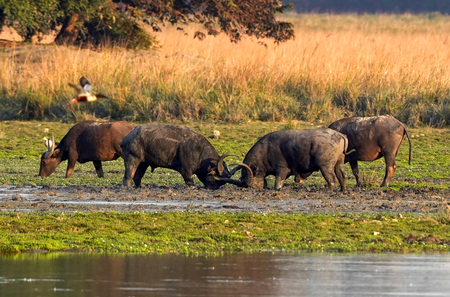
Bhopal, April 27 (IANS) In a major boost to wildlife conservation, Madhya Pradesh is set to witness the return of wild buffalo after more than a century, with Chief Minister Mohan Yadav scheduled to formally launch the reintroduction programme in Balaghat on Tuesday.
The initiative will begin in the Supkhar and Topla areas of the Kanha Tiger Reserve, where the Chief Minister will release a group of four wild buffaloes — three females and one male — into their natural habitat.
This marks the first phase of an ambitious plan to establish a viable wild buffalo population in the state.
The animals are being translocated from Kaziranga National Park, which currently holds one of the largest populations of the species.
Officials in the Forest Department said a total of 50 buffaloes will be introduced over time as part of a scientifically designed “founder population”, with eight animals scheduled for relocation in the current season.
The process is being closely monitored by experts and veterinarians from both reserves.
The programme also signals a broader wildlife cooperation agreement between Madhya Pradesh and Assam.
As part of this exchange, two pairs of rhinos will be brought to Van Vihar National Park, while Madhya Pradesh will send three tigers and six crocodiles to Assam.
The agreement was finalised during discussions between Chief Minister Mohan Yadav and Assam Chief Minister Himanta Biswa Sarma.
Highlighting the significance of the initiative, Yadav said the return of wild buffalo, following the success of Project Cheetah, will further strengthen the state’s biodiversity and ecological balance.
He noted that Madhya Pradesh, already known as the “Tiger State” and “Leopard State”, is now expanding its conservation efforts.
Wild buffalo had disappeared from the region due to excessive hunting, habitat degradation and human interference, with the last recorded sighting in Kanha’s Supkhar region dating back to 1979.
A study by the Wildlife Institute of India identified Kanha’s grasslands, water availability and low human disturbance as ideal for their reintroduction.
–IANS
pd/pgh