Radio Brisvaani

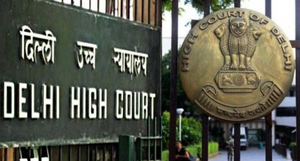
New Delhi, April 28 (IANS) The Delhi High Court has acquitted a former Desk Officer in the Ministry of Industries in a 37-year-old corruption case, holding that the prosecution failed to establish the foundational facts of demand and acceptance of illegal gratification beyond reasonable doubt.
Allowing the criminal appeal, a single-judge Bench of Justice Chandrasekharan Sudha set aside the 2002 conviction and sentence awarded to Ravinder Kumar Chopra in a CBI trap case arising out of allegations that he sought a bribe for facilitating an industrial licence for a granite export unit.
The trial court had convicted the appellant under Sections 120B of the Indian Penal Code and Sections 7 and 13(1)(d) read with Section 13(2) of the Prevention of Corruption Act, and sentenced him to five years’ rigorous imprisonment along with fines. The co-accused, A.S.M. Swamy, who had filed a separate appeal, died during the pendency of proceedings in 2020.
According to the prosecution, Chopra, then posted as Desk Officer in Udyog Bhawan, had in June 1989 demanded Rs 50,000 from the director of a Bengaluru-based company seeking a 100 per cent export-oriented unit licence for the manufacture of cut and polished granites.
It was alleged that Rs 10,000 was later paid through intermediary Swamy during a trap laid by the CBI.
However, the Delhi High Court found multiple inconsistencies in the prosecution’s case, including contradictions regarding the timing of the FIR, the source of trap money, and the sequence of events leading to the alleged meetings.
“The evidence on record is unsatisfactory to find the appellant guilty of the offences charged against him beyond reasonable doubt,” Justice Sudha said. The Delhi High Court recorded that while the complainant claimed he reached the CBI office at around 11 a.m. and then submitted a written complaint, the FIR had been registered at 10.30 a.m.
“So, was the crime registered even before PW2 had lodged his complaint?” the judgment asked. It also questioned the reliability of the audio cassette recordings relied upon by the prosecution. Justice Sudha observed that one tape had already been discarded by the trial court due to poor audio quality, while the second recording also contained several inaudible portions.
“No sample voice of either A1 or A2 had been taken, and hence no comparison of the sample voices with the voices heard in the audio cassette was done,” the judgment said, adding that expert opinion could have substantially aided the prosecution’s case. The Delhi High Court further noted that one of the two independent panch witnesses was never examined, while the other witness did not fully support the prosecution’s version and was treated as hostile.
It also referred to the complainant’s own testimony, indicating that Swamy had discussed consultancy fees for preparing a fresh representation in relation to the licence application. “So, was it consultancy charges demanded by A2 Swami that had been handed over by PW2 on the said day? Doubts certainly arise,” the judgment said.
Justice Sudha held that strong suspicion alone could not substitute legal proof. “There is no doubt that a grave or strong suspicion has been made out against the appellant. But, suspicion, however strong, cannot take the place of proof,” the Delhi High Court said.
Concluding that the prosecution had failed to establish guilt beyond reasonable doubt, the Delhi High Court extended the benefit of doubt to the appellant and acquitted him of all charges.
“The materials of record are insufficient to find the appellant/A1 guilty of the offences charged against him beyond reasonable doubt,” the judgment said, ordering his release and cancellation of his bail bond.
–IANS
pds/uk