Radio Brisvaani

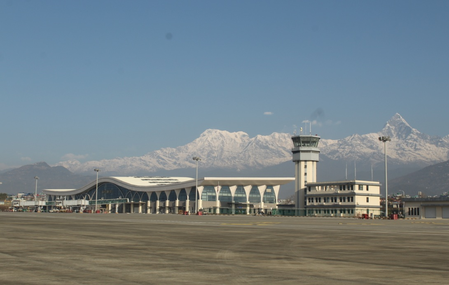
Kathmandu, May 16 (IANS) Nepal and China signed a Memorandum of Understanding (MoU) on cooperation under the Belt and Road Initiative (BRI) on May 12, 2017. Nine years later, no new project has been implemented in Nepal under the BRI, although Beijing has unilaterally categorised the China-assisted Pokhara International Airport in western Nepal as a landmark achievement under the initiative.
Nepal, however, has not recognised the airport as a BRI project because negotiations with China to build the project had begun before Chinese President Xi Jinping announced the BRI scheme in 2013. It had never previously been brought under the BRI framework.
In June 2023, then Foreign Minister N P Saud told Nepal’s Parliament that not a single BRI project has been executed in the Himalayan nation. The situation has not changed in 2026 with no project having been implemented, although preparatory work is underway on a few projects being considered for development under the BRI.
Currently, a detailed feasibility study is underway for the proposed Kerung-Kathmandu Railway project, while some preparatory work has also moved forward on the proposed China-Nepal Friendship Industrial Park in the eastern district of Jhapa.
After the MoU was signed in 2017, the Nepali side proposed 35 projects. The list was later trimmed to nine at China’s request. One of the projects proposed under the BRI — the Phukot Karnali Hydroelectric Project (480MW) — is now being developed through a joint venture between India’s NHPC Limited and Vidhyut Utpadan Company Limited (VUCL).
In 2020, an MoU was signed between Nepal’s Hydroelectricity Investment and Development Company Limited and PowerChina to conduct a detailed feasibility study of the Tamor Storage Hydroelectric Project (756 MW) for jointly developing the project. However, officials said the two sides have disagreements over how the project should be developed. It is also among the projects initially proposed by Nepal to be developed under BRI.
When the two sides signed the BRI implementation plan during then Prime Minister K P SharmaOli’s visit to China in December 2024, the number and names of projects potentially to be developed under the BRI were changed. A total of 10 projects were selected, including the cross-border railway to be developed under the BRI.
The new government under Prime Minister Balendra Shah also announced through the Policies and Programmes for the next fiscal year 2026-27 that it would work to develop a cross-border railway with China.
“One of the main reasons why the BRI failed to kick off in Nepal is confusion over the conditions under which BRI projects would be implemented,” former Foreign Minister Prakash Sharan Mahat told IANS. The BRI MoU was signed in 2017 during Mahat’s tenure as foreign minister.
Mahat said that issues such as whether Chinese grants or loans would be available for BRI projects, what the interest rates would be if Chinese loans were used, and what level of Chinese manpower and goods would be involved in the construction process, among others, needed to be clarified before any project could move into implementation.
Amid concerns across the globe about a potential debt trap arising from high-interest Chinese loans, Mahat said that his party, Nepali Congress, wanted only to grant funding from China for BRI projects. “We can borrow loans at a later stage as well, as a large amount of promised Chinese grants have remained unused so far,” he added.
Even though the Nepali Congress initially had a soft stance on the BRI, it later hardened its position after China appeared to make efforts to unite leftist forces in Nepal. Nepali Congress leaders were opposed to Chinese loans to implement the BRI projects before the two countries signed the BRI framework agreement during the visit to China by then Prime Minister Oli in December 2024.
During the visit, Nepal proposed a “grant assistance financing” modality under the BRI. Officials involved in the negotiations said that the Chinese side removed the word “grant” and proposed the term “assistance financing.” Nepal was uncomfortable with the proposal because it could also imply commercial loans. Nepal then proposed the term “aid assistance financing,” to which the Chinese side agreed. The term was meant to allow grants, soft loans, and technical assistance.
Besides the lack of a clear implementation modality, Nepal has also failed to propose ready-to-go projects under the BRI. Former Nepali Ambassador to China Bishnu Pukar Shrestha told IANS that the problem largely lies with Nepal, as the country has yet to present a list of viable new projects that could be implemented under the BRI.
“The government should submit a list of projects whose feasibility studies have been completed, along with details of the funding Nepal expects from China and the contribution Nepal itself is willing to make,” he said. “BRI projects are implemented under a resource-sharing mechanism.” He added that even without umbrella BRI implementation plans, projects could still be developed through bilateral agreements on individual projects.
Stakeholders say the geopolitical landscape has also affected BRI implementation in Nepal. Nepal’s navigation of the geopolitical environment surrounding the BRI is heavily influenced by the perceptions of its key partners — India, its close neighbour, and the United States, the global superpower — according to a briefing published by the Centre for Social Innovation and Foreign Policy.
The southern neighbour views the BRI as a strategic initiative that would challenge its influence in South Asia, while the United States sees it as an effort by China to expand its sphere of influence, the think tank said.
If BRI projects materialise and their provisions are implemented, it could become difficult for Nepal to maintain its delicate geopolitical balance, the think tank noted. India has opposed the BRI from the beginning because the China-Pakistan Economic Corridor (CPEC) passes through Pakistan-occupied Kashmir (PoK), over which India claims sovereignty.
US officials have also repeatedly warned Nepal about the risks of falling into a “debt trap” associated with high-cost, unsustainable infrastructure projects funded through foreign loans, particularly under China’s BRI. US officials believe the BRI lacks adequate transparency.
The BRI has become associated with controversies, including the Hambantota Port case in Sri Lanka, which was leased to a Chinese company for 99 years. India often fears that such projects in its neighbourhood could potentially be used by China for surveillance and other strategic purposes.
Pokhara International Airport — from which no regular international flights have begun even three years after its inauguration — has also emerged, according to critics, as another white elephant project and an example of China’s alleged debt-trap diplomacy.
“As our debt level is already high, we cannot afford to take high-interest loans from any country,” former Foreign Minister Mahat told IANS.
–IANS
scor/as