Radio Brisvaani

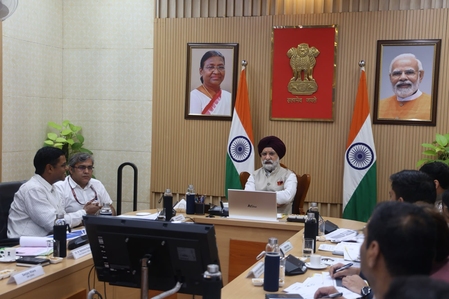
New Delhi, June 11 (IANS) Delhi Lieutenant Governor T.S. Sandhu on Thursday called for making all rainwater harvesting systems operational ahead of the monsoon, directing officials to step up efforts to recharge groundwater and conserve water.
Sandhu interacted with officials of all civic agencies and directed them to expedite repairs to piping, gutters, and storage tanks in a time-bound manner, with a focus on rainwater harvesting structures in government schools and buildings.
In a message on X, Sandhu said, “Reviewed the status of rainwater harvesting preparedness across the capital in a meeting today with senior officials of DDA, MCD, and NDMC.”
“Clear directions, along with strict timelines, were issued to expedite structural repairs and ensure that all rainwater harvesting systems are made fully operational well ahead of the monsoon season,” he said.
Sandhu said that officials were directed to comprehensively assess the total installed capacity of all rainwater harvesting structures across Delhi, with the objective of establishing a robust baseline for future planning, groundwater recharge, and long-term water conservation efforts.
Earlier, Delhi Chief Minister Rekha Gupta said that the government has decided to revive and make functional the existing rainwater harvesting systems in 75 CM Shri Schools across the capital.
She said the initiative is expected to create an annual rainwater harvesting capacity of nearly 50 crore litres.
She said that the government will adopt the ‘Ehsaas’ model for rainwater harvesting in schools. Approved by the Delhi Jal Board in 2021, the model is known for its low cost, minimal space requirement and near-zero maintenance.
Under the system, rainwater collected from rooftops will be filtered and connected to storage units and borewells, helping recharge groundwater and even revive dry borewells.
According to the Chief Minister, technical teams have completed inspections of all 75 schools and submitted their reports.
The audit found that while most schools already had rainwater harvesting systems in place, many had remained non-functional for years or had not been properly maintained, according to a statement.
Several harvesting pits were found completely blocked, while others were filled with plastic waste, silt, debris and garbage. In some cases, school authorities were unaware that such structures even existed on their premises.
The inspection also revealed that rainwater was flowing directly into drains at many locations, defeating the purpose of water conservation. Design-related deficiencies were also identified in several structures, it said.
–IANS
rch/dan