Radio Brisvaani

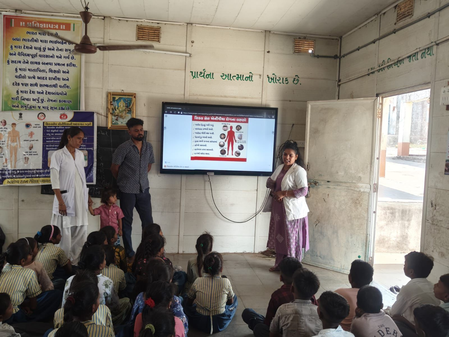
Gandhinagar, June 18 (IANS) As India intensifies efforts to eliminate sickle cell disease by 2047, Gujarat’s long-running programme has emerged as a key model, with more than 1.11 crore people screened across the state since the initiative was launched two decades ago.
Ahead of World Sickle Cell Awareness Day on June 19, state officials highlighted Gujarat’s progress in tackling the hereditary blood disorder, particularly among tribal communities where the disease is most prevalent.
The programme, launched in 2006 under the leadership of then Gujarat Chief Minister and current Prime Minister Narendra Modi, was the first large-scale state-led sickle cell control initiative in the country and later informed the design of India’s National Sickle Cell Anaemia Elimination Mission.
According to official data, more than 23 lakh screenings have been conducted over the past five years under the administration of Chief Minister Bhupendra Patel, bringing the state’s cumulative total to over 1.11 crore.
Gujarat currently has 30,512 registered patients under its sickle cell programme.
The state’s healthcare network has expanded significantly to support early diagnosis and treatment. Initial screening using DTT tests is available at all Primary Health Centres, while 41 High-Performance Liquid Chromatography (HPLC) and mini-electrophoresis machines have been deployed across 14 tribal districts.
Dedicated day-care centres for sickle cell patients are operational in Valsad, Navsari and Dang-Rumla. The state has also strengthened financial support for patients through its Patient Assistance Scheme.
A total of Rs 18.15 crore has been disbursed to 13,040 beneficiaries. During the 2024-25 financial year, the monthly lifelong assistance provided to patients was increased from Rs 500 to Rs 2,500.
To reduce the risk of genetic disorder transmission to future generations, Gujarat has deployed 180 dedicated counsellors at Primary Health Centres.
State Health Minister Praful Pansheriya recently encouraged young people to determine their sickle cell status before marriage, describing the test as an important “medical horoscope”.
Speaking on the occasion of World Sickle Cell Awareness Day 2026, observed globally under the theme “Closing the Survival Gap: Equity in Sickle Cell Disease”, Padma Shri awardee and translational scientist Dr Yazdi Italia said Gujarat’s programme had demonstrated how healthcare services could be successfully delivered to remote tribal populations.
“In 2006, Gujarat established an important milestone by launching a holistic Sickle Cell Control Programme. The programme introduced free screening in rural and tribal areas, early diagnosis, genetic and ethical counselling, vaccination, availability of medicines such as folic acid and hydroxyurea, and regular follow-up services,” he said.
According to Dr Italia, the Gujarat model significantly reduced pain crises, complications and hospitalisations among patients and later became the basis for wider national adoption through the National Health Mission.
The central government subsequently launched the National Sickle Cell Anaemia Elimination Mission on July 1, 2023, with the objective of substantially reducing the disease burden by 2047.
Dr Italia said the global theme for this year’s observance underscored the importance of ensuring equal access to diagnosis, treatment and long-term care regardless of geographical location or economic circumstances.
He noted that sickle cell disease can lead to severe pain episodes, chronic anaemia, recurrent infections, organ damage and premature death, but many complications can be prevented through regular medical supervision, vaccination, adequate hydration, timely treatment and patient education.
The national mission, together with the Ayushman Bharat scheme, provides free screening, diagnosis, treatment, blood transfusion services, ambulance support and management of disease-related complications.
Some patients are also eligible for disability benefits and other social security programmes.
“Awareness remains the most important pillar of the success of this entire campaign,” Dr Italia said, urging patients and families to maintain regular contact with healthcare workers and counsellors and to utilise available government services.
He also highlighted the growing role of preventive technologies, including in vitro fertilisation and pre-implantation genetic diagnosis, which can help high-risk couples avoid passing severe genetic blood disorders to their children.
At the same time, advances in stem cell transplantation, bone marrow transplantation and gene-editing therapies are creating new possibilities for treatment.
Recent national programme data show that more than seven crore people have been screened in high-prevalence states across India.
Authorities have identified more than 2.46 lakh patients with sickle cell disease and over 20 lakh individuals carrying the sickle cell trait.
The state government has confirmed plans to establish a specialised Centre of Competence, Research and Counselling at Surat Civil Hospital to strengthen clinical research, treatment and genetic counselling services as efforts continue towards the long-term goal of eliminating sickle cell disease as a major public health challenge.
–IANS
mys/dan