Radio Brisvaani

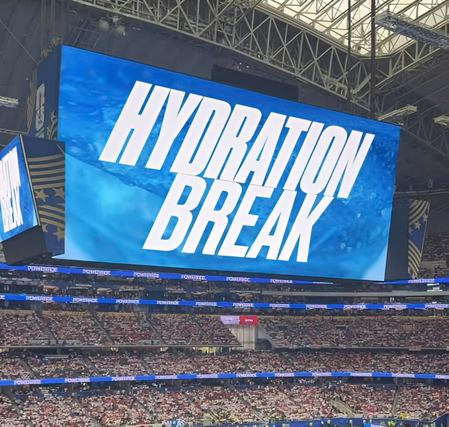
Mexico City, June 22 (IANS) As players battle high temperatures at the FIFA World Cup in North America, a measure introduced to protect their well-being has become one of the tournament’s most debated topics.
FIFA has made three-minute hydration breaks mandatory midway through each half of every match, regardless of weather conditions. The governing body says the policy ensures consistent treatment across the tournament and reflects lessons from previous competitions played in hot conditions.
The rule has drawn criticism from some of football’s most prominent figures, who argue that it changes the dynamics of matches, reports Xinhua.
Uruguay head coach Marcelo Bielsa has emerged as one of the leading opponents. He said the stoppages disrupt the rhythm of games, effectively dividing them into four periods instead of two.
“They add nothing and take away a lot,” Bielsa said. “I’m saying that before this decision, football had one characteristic and now it has a different one. People fall in love with the game because of its characteristics,” he added.
Netherlands captain Virgil van Dijk has also questioned the policy. While accepting the need to protect players during periods of intense heat, he argued that conditions should determine whether breaks are required.
Germany head coach Julian Nagelsmann acknowledged during the tournament that a hydration break had helped his side make adjustments during a match.
Sports scientists argue that the policy is a necessary safeguard, even when conditions do not feel particularly severe.
Specialists note that players can lose significant amounts of fluid through sweating during a match, particularly during afternoon kickoffs in summer conditions. Dehydration can affect concentration, decision-making and physical output, according to researchers. Oppressive heat, meanwhile, can strain the cardiovascular and nervous systems, with potentially serious consequences.
“When we look at the three-minute hydration breaks, we’re really looking at this as a way to mitigate anything that could potentially lead to an incident or an emergency,” said Joshua DeVincenzo, assistant director of applied research services at Columbia University’s National Center for Disaster Preparedness.
Those concerns have gained greater attention as football stages more tournaments during Northern Hemisphere summers. FIFA has pointed to experiences at previous competitions in North America, where players faced temperatures above 32 degrees Celsius (90 degrees Fahrenheit).
Some researchers support the policy but question whether three minutes is enough to achieve meaningful cooling and rehydration.
Studies have shown that players can lower their body temperature and improve comfort levels during cooling breaks if they consume cold fluids and use methods such as ice towels. However, experts say the benefits depend heavily on how effectively the short interval is used.
“Even in ideal settings, the breaks can slightly help but will not eliminate the risk of heat illness in response to a rise in core temperature,” researcher Julien Periard said.
Several specialists have suggested extending the stoppages when temperatures reach extreme levels, arguing that additional recovery time could provide greater protection.
That leaves FIFA facing pressure from different directions. Some players and head coaches believe the interruptions affect the contest, while some researchers argue that longer stoppages may be needed in extreme conditions.
The disagreement highlights a challenge that is unlikely to disappear after this World Cup. As temperatures rise and major tournaments continue to expand into warmer regions, football authorities will face growing pressure to balance tradition with player welfare.
–IANS
bc/