Radio Brisvaani

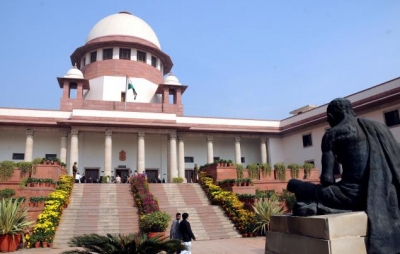
New Delhi, July 1 (IANS) The Supreme Court on Wednesday ruled that an advocate cannot compromise or surrender a client’s substantive property rights without express authorisation, holding that a compromise decree passed solely on the basis of a lawyer’s consent, without the client’s signature or clear approval, is contrary to law.
A Bench of Justices Sanjay Karol and NK Singh dismissed an appeal filed by the legal heirs of the original plaintiffs, affirming the Patna High Court’s decision upholding the trial court’s order setting aside the compromise decree passed in a 1989 partition suit.
The Justice Karol-led Bench said that the compromise accepted by the civil court in February 1994 was not in conformity with Order XXIII Rule 3 of the CPC, which mandates that a lawful compromise must be in writing and signed by the parties.
The dispute arose out of a partition suit filed in 1989 seeking a one-fourth share in ancestral property.
During the pendency of the suit, a compromise petition was accepted by the trial court in 1994, followed by a final decree in 1997.
Nearly 25 years later, the legal heirs of one of the defendants approached the court alleging that the compromise decree had been obtained fraudulently as the original defendant had neither signed the compromise petition nor authorised his counsel to do so.
In its judgment, the Supreme Court held that while the defendant’s counsel had recorded “no objection” on the compromise petition, there was nothing on record to show that the advocate (identified as Mehta) had express authority from the client to surrender substantial rights over the property.
“There is no express authorisation by defendant no.5 allowing Mr Mehta to sign the compromise on his behalf, nor is there anything on record to demonstrate the exigent circumstances which prompted the counsel to act without seeking a clear approval from defendant no.5,” the bench said.
“In absence of the aforesaid, the ‘voluntary’ aspect mandated by Order XXIII Rule 3 of the Code of Civil Procedure, 1908, which is essential for a compromise decree, cannot be established on the record. As such, the requirements of Rule 3 have not been complied with. The resulting compromise is contrary to law,” it added.
The top court reiterated that although advocates represent clients before courts, they cannot unilaterally surrender or conclude their clients’ substantial legal rights.
Quoting an earlier three-judge Bench decision, the judgment said: “It is the solemn duty of an advocate not to transgress the authority conferred on him by the client. It is always better to seek appropriate instructions from the client… before making any concession which may, directly or remotely, affect the rightful legal right of the client.”
It further observed that a lawyer “generally has no implied or apparent authority to make an admission or statement which would directly surrender or conclude the substantial legal rights of the client” unless specifically authorised.
Dealing with the objection that the challenge had been brought nearly 25 years after the compromise decree, the Supreme Court held that delay alone could not legitimise an order that was contrary to law.
“If the delay had been the ground to dismiss the miscellaneous case, the effect would be to perpetuate something which is not in accordance with law. The same cannot be permitted,” the judgment said.
“The law of limitation, while undoubtedly an important facet of the legal system, cannot be used as a means to defeat substantive rights,” it added.
However, the apex court clarified that such condonation of extraordinary delay would depend on the facts of each case and should not be treated as a general rule.
“It is not in all cases that such large delay can be set aside. Whether or not a particular case warrants taking such a view is to be determined after a detailed examination of the record in each case,” it observed.
Upholding the trial court’s order setting aside the compromise decree, the Supreme Court said the underlying partition dispute must now proceed to a full-fledged trial despite the suit having been instituted in 1989.
“While we acknowledge the difficulty that may arise in a 1989 suit being taken to trial 37 years later, it is not possible to decide the rights of the parties without the due process of collection and weighing of evidence, whatever may be available,” the judgment said.
–IANS
pds/vd