Radio Brisvaani

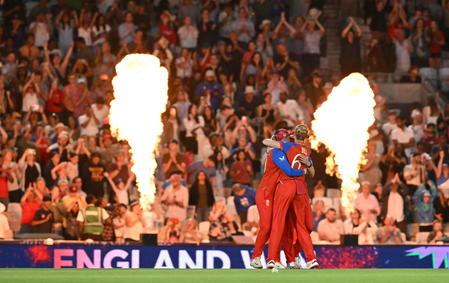
London, July 4 (IANS) England’s unbeaten march has carried them to the doorstep of history. On Sunday at Lord’s, the inaugural champions will face six-time title winners Australia in the ICC Women’s T20 World Cup 2026 final, seeking to preserve a remarkable record that stretches across every women’s World Cup they have hosted.
What makes England’s campaign stand out is not simply the six victories on the bounce, but the variety with which they have arrived at the title clash. Record-breaking batting displays, disciplined bowling performances, recoveries from difficult positions and contributions from almost every corner of the squad have underlined a tournament in which they have rarely looked out of control.
A statement on opening night against Sri Lanka
England wasted no time announcing themselves as contenders. In the tournament opener against Sri Lanka, they rewrote the record books by posting 219/1, the highest team total in Women’s T20 World Cup history.
The innings belonged to Danni Wyatt-Hodge, who produced an unbeaten 105 from 62 deliveries to register the first century of the tournament. Amy Jones added a fluent half-century, while captain Nat Sciver-Brunt provided the finishing touches with an unbeaten 46.
Sri Lanka never recovered from the assault. Freya Kemp ripped through the batting order with figures of 4/22 as England wrapped up an emphatic 87-run victory to begin their campaign in ideal fashion.
Bowlers take charge against Ireland
England’s second win came through a different route. Rather than overpowering opponents with the bat, they strangled Ireland through disciplined bowling.
Sophie Ecclestone and Charlie Dean dictated the contest by limiting Ireland to 118/9. Ecclestone claimed three wickets while Dean’s economical spell ensured there was never any sustained momentum for the Irish batting unit.
The chase briefly threatened to become complicated after England lost regular wickets, with Sciver-Brunt even being retired out on 48. Nevertheless, the hosts completed the chase comfortably with four wickets in hand and more than two overs remaining.
Responding under pressure versus Scotland
For the first time in the tournament, England suffered an early setback when Amy Jones departed off the opening delivery against Scotland. The wobble barely lasted.
Sophia Dunkley counter-attacked with a sparkling 57 from just 37 balls, while Alice Capsey’s aggressive 40 shifted the momentum completely. Freya Kemp and Dani Gibson then added valuable late runs to carry England to 200/5.
Scotland never truly threatened the target as Ecclestone once again showcased her consistency, helping restrict them to 162/7 and sealing another comfortable victory.
Middle order answers West Indies challenge
West Indies posed one of England’s sternest tests in the group stage after reducing the hosts to 38/2. Once again, England found solutions. Wyatt-Hodge anchored the recovery with another half-century before Heather Knight accelerated in the closing overs with an enterprising 43 to push the total to 186/7.
England’s bowlers ensured the chase never gathered momentum. Despite Chinelle Henry’s unbeaten fifty, West Indies were kept to 148/5, giving England a fourth successive win and virtually confirming their place in the knockout stage.
Clinical finish against New Zealand
With New Zealand needing victory to keep their title defence alive, England produced arguably their most complete performance of the league phase.
The White Ferns began brightly through Melie Kerr and Isabella Gaze before England’s bowlers triggered a dramatic collapse, removing three batters in the space of four deliveries without conceding a run.
Set 164, England made the chase look routine. Wyatt-Hodge continued her outstanding tournament with a commanding 89 as the hosts romped home by nine wickets with 16 balls remaining, completing a flawless group stage.
Character on display in the semi-final against South Africa
England’s toughest examination arrived in the semi-final against South Africa. The innings could hardly have begun worse. Marizanne Kapp and Shabnim Ismail dismantled the top order, reducing England to 23/3 inside the opening exchanges. What followed was the defining partnership of their campaign.
Returning from a calf injury, captain Nat Sciver-Brunt joined forces with Heather Knight to produce a magnificent 133-run stand, the highest partnership in Women’s T20 World Cup history. Sciver-Brunt led from the front with 75, while Knight’s composed 58 transformed England from early trouble to a competitive 169/5.
South Africa made a positive start through Laura Wolvaardt and Tazmin Brits, but England’s bowling unit steadily tightened the screws. Charlie Dean and Lauren Bell struck twice apiece, while the attack collectively denied South Africa any sustained momentum, restricting them to 129/8 and securing a 40-run victory.
A campaign built on depth
While Wyatt-Hodge has emerged as England’s standout performer with a century and multiple match-winning knocks, the journey to the final has been far from a one-player show.
Sciver-Brunt has delivered captain’s innings under pressure, Knight has rescued England when required, Ecclestone has remained the leader of the bowling attack, while Dean, Kemp, Bell, Dunkley, Capsey and Gibson have all made decisive contributions at different stages.
That collective strength has allowed England to adapt to every challenge, whether posting tournament-record totals, defending modest scores or recovering from difficult starts.
Now only Australia stand between the hosts and a second Women’s T20 World Cup crown. England arrive at Lord’s unbeaten, confident and carrying the weight of an extraordinary home record that has survived every Women’s World Cup played on English soil. One final victory would make this campaign one of their finest yet.
–IANS
vi/