


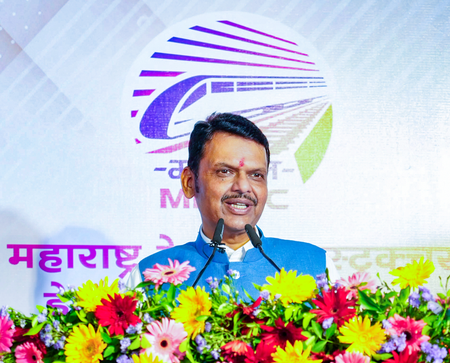
Maha needs collective effort to be drug‑free: CM Fadnavis
- BY India News Newsdesk
- July 17, 2026
- 0 COMMENTS
Mumbai, July 16 (IANS) Chief Minister Devendra Fadnavis on Thursday called for a collective public movement to build a strong, drug‑free Maharashtra.
At a high‑level review meeting, he directed authorities to uproot the illicit economy surrounding natural and synthetic drug manufacturing, supply, and trade. He announced that awareness about the adverse effects of drug abuse will be integrated into the school curriculum for classes 7 to 10.
Fadnavis said the focus will be on curriculum integration, campus policies, de‑addiction networks, healthcare, legal measures, and incentives. School principals and college directors must declare campuses as drug‑free zones.
He noted that a robust network of de‑addiction centres will be established in coordination with NGOs, the Medical Education Department, the Public Health Department, and the Anti‑Narcotics Cell.
The Brihanmumbai Municipal Corporation (BMC) has been directed to set up multidisciplinary centres in Mumbai, while government hospitals will reserve beds for de‑addiction treatment.
Special fast‑track courts will be set up to ensure speedy trials under the Narcotic Drugs and Psychotropic Substances (NDPS) Act. Prosecutors will undergo specialised training to secure higher conviction rates.
Police have been instructed to track down peddlers, map supply networks, and intensify patrols in high‑risk zones.
A reward scheme will be launched for citizens who provide confidential information that leads to drug busts. Police officers who demonstrate exemplary performance will receive a 3 per cent salary advance and special awards.
Investigating officers will be allowed air travel under operational requirements.
According to the government, in 2025, the Maharashtra Police registered 17,611 cases and seized 56,206 kg of narcotics worth Rs 1,340 crore. A total of 15,994 accused were arrested, including 72 foreign nationals.
Earlier, during the Monsoon Session, Fadnavis announced zero‑tolerance measures against drug syndicates. Police personnel found involved in drug crimes will be dismissed from service.
He personally reviews narcotics cases daily and has directed anti‑narcotics squads to be set up in every police station.
The Maharashtra Control of Organised Crime Act (MCOCA), 1999, has been amended to classify large‑scale drug trafficking as organised crime, making bail difficult and enabling property seizure.
The government also proposed stricter laws against adults using minors as couriers and initiated SOPs to deport foreign nationals running drug rings.
–IANS
sj/dan
Related Post



Our Current Issue
Alluring India 2026

Our Advertisers



Follow Us