Radio Brisvaani

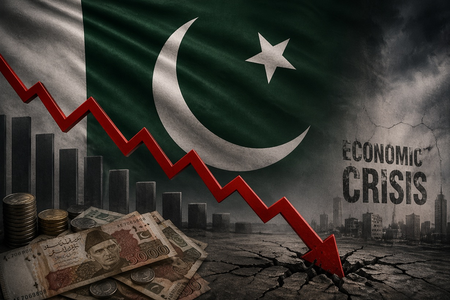
New Delhi, July 27 (IANS) Pakistan is facing renewed pressure over its continued access to the European Union’s Generalised Scheme of Preferences Plus (GSP+) trade benefits, with the latest monitoring report raising serious concerns over the country’s human rights record, governance standards and implementation of international commitments, according to a report.
A report published in Business Recorder flagged persistent issues relating to the rule of law, freedom of expression, enforced disappearances, judicial independence and accountability, casting fresh uncertainty over Pakistan’s eligibility for the revised GSP+ framework that will come into effect from 2027.
The European Union’s observations come at a time when Pakistan’s fragile economy has become increasingly dependent on the preferential trade arrangement, it added.
Since joining the GSP+ scheme in 2014, Pakistan has enjoyed tariff-free or preferential access to the EU market, exporting goods worth 7.5 billion euros under the programme in 2024 alone.
The tariff concessions are estimated to have been worth around 732 million euros, according to the report.
The latest review assumes greater significance as Pakistan continues to struggle with weak export growth, subdued foreign investment and heavy dependence on remittances to support its external sector.
With exports failing to diversify and competitiveness remaining weak, analysts warn that any disruption to GSP+ benefits could severely impact the country’s already stressed economy, particularly its textile sector, which relies heavily on the European market.
In addition, the report stressed that preferential market access under GSP+ is conditional upon compliance with international conventions and is not an unconditional or permanent arrangement.
It further noted that Pakistan has repeatedly come under scrutiny during previous review cycles, with concerns resurfacing over its implementation of commitments accepted under the scheme.
The revised GSP+ regime from 2027 is expected to place even greater emphasis on measurable compliance, increasing the risk for countries that fail to address governance and human rights concerns.
The report also warned that Pakistan cannot indefinitely rely on preferential trade concessions while delaying structural reforms needed to make its export sector globally competitive.
It said the country’s continued dependence on a narrow export base and limited markets leaves it highly vulnerable if preferential access to the EU is curtailed.
–IANS
ag/