Radio Brisvaani

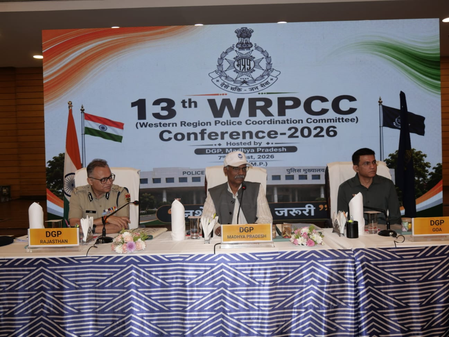
Indore, Aug 7 (IANS) Police chiefs of seven western states and J&K on Friday agreed to institutionalise real‑time intelligence sharing, appoint nodal officers and launch joint operations against cybercrime, organised crime and narco networks, in a major push to strengthen interstate policing and coordinated law enforcement.
The consensus was reached at the 13th Western Regional Police Coordination Committee meeting held in Indore under the chairmanship of Madhya Pradesh Director General of Police (DGP) Kailash Makwana.
Police chiefs and senior officers from Madhya Pradesh, Rajasthan, Gujarat, Maharashtra, Goa and J&K attended the meeting.
According to a statement from Madhya Pradesh police headquarters, the committee decided that each participating state would designate a nodal officer to facilitate seamless exchange of real‑time intelligence, monitor interstate investigations and ensure regular coordination among police forces.
It also agreed to share databases of wanted and reward‑carrying criminals and undertake coordinated action against organised criminal syndicates operating across state borders.
“Criminals no longer remain confined to one state. Our response must therefore be based on real‑time intelligence sharing, coordinated operations and continuous communication among police organisations,” Madhya Pradesh DGP Kailash Makwana said while addressing the conference.
The police chiefs also agreed to prepare a joint action plan against the illegal manufacture, transportation and use of narco chemicals, with simultaneous enforcement drives aimed at dismantling interstate supply chains. The committee identified cybercrime, narcotics trafficking and organised criminal networks as key emerging threats requiring a collective regional response.
Another major focus of the meeting was security planning for Simhastha‑2028 in Ujjain. The police leadership discussed integrated arrangements for crowd management, surveillance, interstate movement of pilgrims, emergency response and intelligence coordination for the mega religious congregation, which is expected to attract millions of devotees from across the country and abroad.
The meeting further resolved to strengthen preventive policing through collaboration with school and higher education departments by promoting awareness on cyber safety, drug de‑addiction, women’s safety and road safety among students.
Representatives from the participating states presented successful case studies on tackling cybercrime, organised crime, narcotics control and technology‑enabled investigations. They also exchanged best practices in the use of digital tools for crime detection and investigation.
The conference appreciated Madhya Pradesh Police’s technology‑driven initiatives, including e‑Sakshya, e‑Vivechana, e‑Rakshak, MedLEaPR, e‑Summons, Safe Click and Operation Muskaan, describing them as effective policing models that other states could replicate.
“The institutional mechanisms agreed upon today will significantly strengthen interstate policing and enable faster, more effective action against evolving security challenges through collective effort and technology,” Makwana said while concluding the meeting.
The committee unanimously decided that the Goa Police will host the 14th Western Regional Police Coordination Committee meeting.
–IANS
pd/dan