Radio Brisvaani

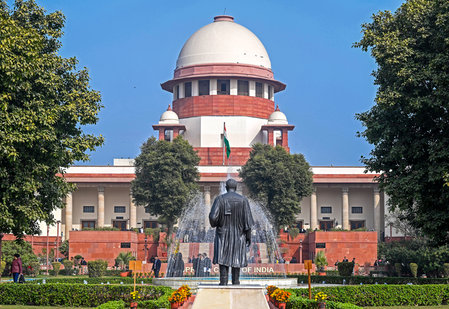
New Delhi, Aug 10 (IANS) The Supreme Court on Monday dismissed as withdrawn a public interest litigation (PIL) filed seeking directions to register, recognise, supervise and monitor all institutions imparting secular education and/or religious instruction to children up to the age of 14 years.
A Bench of Justices Aravind Kumar and Vipul M. Pancholi, at the outset, made it clear that it would not entertain the third petition filed by advocate Ashwini Kumar Upadhyay on the same issue after the apex court had earlier declined to entertain two similar petitions by him.
The apex court noted that an earlier writ petition on the same cause was disposed of by directing the PIL litigant to make a representation to the authorities.
Subsequently, another writ petition was dismissed, with the top court observing that the petitioner had to await a decision on the representation.
The latest PIL, filed under Article 32 of the Constitution, sought directions to the Centre and the state governments to register, recognise, supervise and monitor all educational institutions imparting secular education and/or religious instructions to children up to the age of 14 years.
It also sought a declaration that Article 30(1) of the Constitution is a specific reiteration of Article 19(1)(g), and that institutions imparting religious instruction fall under Article 26.
The plea further sought a declaration that the expression “educational institutions of their choice” under Article 30(a) means secular/professional educational institutions of their choice and not religious educational institutions.
The petition claimed that Upadhyay, during visits to Gonda, Bahraich, Shravasti, Balrampur, Siddharthnagar and Maharajganj districts of Uttar Pradesh from January 23, 2026, onwards, came across non-registered and non-recognised institutions. It claimed that further inquiry showed the mushrooming of such institutions in bordering districts across the country.
The petitioner alleged that thousands of unregistered and unregulated institutions were allegedly “radicalising gullible young children under the garb of imparting religious instruction”, claiming that the absence of government supervision had implications for internal security, fraternity, unity and national integration.
The plea argued that the government is obligated under Article 21-A read with Articles 39(f), 45 and 51A(k) to ensure registration, recognition, supervision and monitoring of all institutions imparting education or religious instruction to children up to the age of 14 years. It contended that Article 21-A not only mandates free and compulsory education but also requires equal quality education, which “could not be ensured without registration, recognition, supervision and monitoring of institutions”.
The petition also raised several constitutional questions concerning the interplay between Articles 19, 25, 26, 28 and 30, including whether Article 30 is a specific reiteration of Article 19(1)(g), whether it confers any additional rights on minority institutions, and whether institutions imparting religious instruction are covered under Article 26 rather than Article 30. It further questioned the meaning of “of their choice” under Article 30 and sought clarification on the definition and parameters for identifying a minority under the Constitution.
The petitioner also raised concerns relating to the safety of children, alleging that unregistered and unrecognised institutions could facilitate trafficking and child labour and prevent the effective implementation of welfare schemes. The plea relied on the Supreme Court’s earlier judgment in State of Tamil Nadu vs. K. Shyam Sunder to stress the need for equal quality education for children.
–IANS
pds/uk