Radio Brisvaani

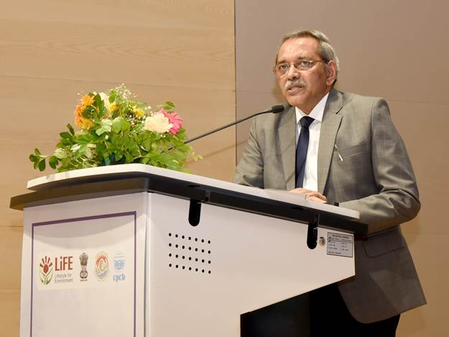
New Delhi, Sep 7 (IANS) On the occasion of the International Day of Clean Air for Blue Skies, the National Green Tribunal’s Chairperson, Justice (Retired) Prakash Shrivastava, said on Monday that air pollution is a complex challenge as it doesn’t know political boundaries and described clean air as a fundamental need rather than a luxury.
Speaking at an event organised by the Union Ministry of Environment, Forest and Climate Change (MoEFCC) to mark the ‘Swachh Vayu Diwas 2026’, Justice Shrivastava said, “Development and environmental conservation are not at cross purposes but can go together while maintaining the quality of life for citizens.”
The National Green Tribunal (NGT) Chairperson stressed that it is the responsibility of each citizen to ensure that generations to come are able to live in a clean environment, said an official statement.
Justice Shrivastava said, “It is essential that local bodies strive for prevention of pollution generation at source by making citizens aware; adopt latest technologies to tackle the issue; and engage in an all-inclusive and ‘Whole of Society’ approach to address the issue.”
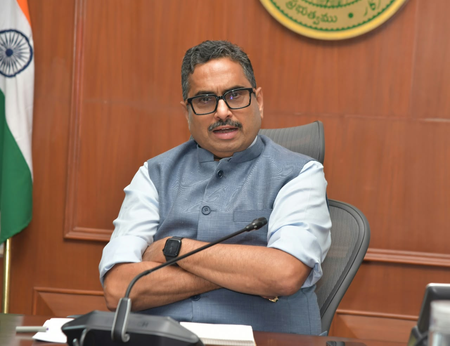
Environment Secretary, Tanmay Kumar, said that the government is adopting a multi-pronged, coordinated and scientific approach towards tackling air pollution as per Prime Minister Narendra Modi’s vision.
During the event, the Environment Ministry also awarded the best performing Cities and Wards under National Clean Air Programme (NCAP), ranked as part of the 5th Swachh Vayu Sarvekshan.
The awards were based on participation and ranking of all 130 cities in three groups (Population below 3 lakh; 3-10 lakh and above 10 lakh), through the process involving self-assessment by cities, approval by State-level Monitoring Committee, evaluation by the Central Pollution Control Board (CPCB), field verification by Independent Committees and selection of 10 best performing cities, said the statement.
Secretary Tanmay Kumar said that the NCAP provides a framework where cities have their own strategies to ensure clean air, while the Portal for Regulation of Air-Pollution in Non-Attainment Cities (PRANA) portal tracks various parameters of air quality management for 130 cities under NCAP.
The NCAP has shown positive results in terms of achieving reduction in PM10 levels in 2025-26 with respect to the levels of FY 2017-18, said the statement.
It said that 108 out of 130 cities have shown improvement in PM10 levels; 72 cities have achieved reduction in PM10 concentrations of more than 20 per cent; 26 cities have recorded reductions exceeding 40 per cent and 14 cities have met National Ambient Air Quality Standards (NAAQS).
During the event, the Compendium of Best Management Practices under NCAP was also released. It highlights best practices and successful air quality improvement measures implemented by cities and State Pollution Control Boards/Committees under NCAP, in various sectors namely, Road Dust Control, Vehicular Pollution, Control of Open Burning, Greening, Use of technology and Public Outreach.
–IANS
rch/rad