Radio Brisvaani

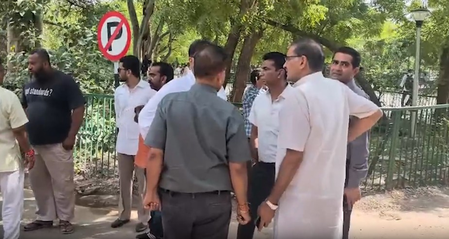
Jaipur, Sep 8 (IANS) A social organisation associated with the UGC-related demands of the general category has introduced an unusual condition in Rajasthan’s civic elections, seeking Rs 100 non-judicial stamp-paper affidavits from candidates before extending electoral support.
The exercise, being carried out under the banner of Mahipal Makarana-led Savarn Nyay Manch, has reportedly reached more than 1,000 candidates contesting civic and local body elections. The organisation says the affidavits are intended to ensure that candidates who receive its backing remain committed to its demands even after winning elections.
What has triggered debate, however, is a clause in the affidavit that appears to go beyond campaign commitments. According to the document, candidates are required to declare that after winning the councillor election, the “UGC panel” would decide which political party they would support. The provision has sparked discussion in political circles as it links electoral backing with a post-election political decision.
Convenor Mahipal Makarana said the affidavits were being obtained to ensure that candidates do not abandon the issues on which they sought support after entering office.
The development comes at a time when Rajasthan’s civic elections are already witnessing intense competition, ticket-related resentment and the emergence of independent and rebel candidates.
“More than 1,000 candidates have been supported under the banner of Savarn Nyay Manch in connection with the UGC issue. We are getting the stamp paper affidavits signed so that they do not switch sides after winning,” Makarana said.
Traditionally, election-time support is based on meetings, appeals, community equations and verbal commitments. The stamp-paper affidavit introduces an unusual element, a written assurance that extends beyond the campaign itself.
The move also raises questions about the changing nature of civic politics, where candidates increasingly depend not only on established political parties but also on community groups, social organisations and issue-based campaigns.
For the Savarn Nyay Manch, the affidavit is being projected as a mechanism to protect its political interests. For candidates, however, agreeing to such a condition could potentially carry political implications after the election.
Whether these affidavits have any legal or binding force is a separate question. But politically, they underline one emerging reality of Rajasthan’s civic polls: the battle for votes is increasingly becoming a battle for post-election commitments as well.
–IANS
arc/skp