Radio Brisvaani

Nagoya, Sep 19 (IANS) The Asian Games may have officially begun amid a colourful opening ceremony in Nagoya, but for several athletes, the start of the continental showpiece has been accompanied by confusion, logistical challenges, and concerns over arrangements.
Indian athletes are not the only ones to have faced such issues. Athletes from other participating nations have also voiced complaints about the arrangements, with some taking photographs of the problems they encountered and sharing them on social media.
The concerns have encompassed accommodation, transportation, communication, and other logistical arrangements, intensifying the sense of uncertainty in the days before the opening ceremony.
“There are a lot of problems — accommodation, everybody is confused. Language could also be a reason. But when you host such a major tournament, you must plan accordingly,” Indian athletes told IANS on condition of anonymity.
“Japan has been a good host earlier. We don’t know what happened this time, but hopefully, after this day, the Games will run smoothly and without any issues,” they added.
The athletes also noted that a considerable number of competitors are still to arrive in Japan, allowing organisers some time to resolve issues before the entire team begins competition.
“There are more Indian athletes yet to join here. The Indian government is doing a good job, and so is the IOA. Let’s hope for the best,” the athletes said.
For an Asian Games of this magnitude, the opening days often see a flood of athletes, officials, and support staff arriving from various countries. However, complaints from athletes of different nationalities have highlighted the importance of coordination as Nagoya prepares to host one of Asia’s largest sporting events.
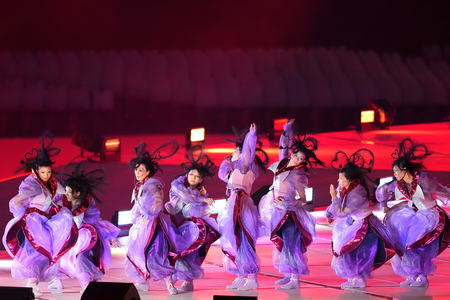
However, on Saturday evening, the focus shifted from organisational concerns to the spectacle of the opening ceremony.
Mizuho Park Athletic Stadium became a gathering point for athletes from across the continent as the 20th Asian Games were officially opened in Aichi-Nagoya.
Emperor Naruhito of Japan officially declared the Games open, marking the beginning of over two weeks of competition involving thousands of athletes.
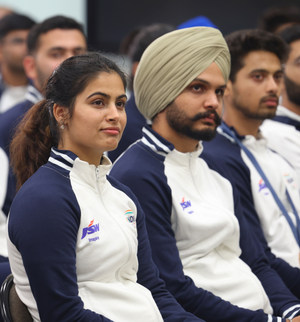
India’s contingent enjoyed a proud moment as Olympic medallist Manu Bhaker and kabaddi star Pawan Sehrawat led the team into the stadium carrying the national colours.
The pairing united two distinct sporting worlds. Bhaker symbolised India’s Olympic shooting success, while Sehrawat embodied the strength and tradition of kabaddi, having been part of India’s gold-medal-winning campaign at the previous Asian Games.
However, Sehrawat’s presence was due to a last-minute change.
Shot putter Tajinderpal Singh Toor had originally been named India’s male flagbearer, but a technical issue prevented him from participating in the ceremony. Sehrawat was subsequently drafted in to accompany Bhaker.
Once the Indian contingent entered the arena, the unexpected change took a backseat to the moment itself.
The tricolour fluttered through the stadium as Indian athletes waved to spectators and celebrated the official start of their Asian Games campaign.
The opening ceremony highlighted Japan’s culture and traditions, providing a ceremonial respite from the logistical worries that had engaged athletes and officials during the build-up.
Now, with the Games officially underway, athletes from India and other participating nations will hope that the focus shifts entirely to competition — and that the organisational issues encountered during the opening days are resolved swiftly.
For Nagoya, the real test begins with the sport.
— IANS
cs/vi