Radio Brisvaani

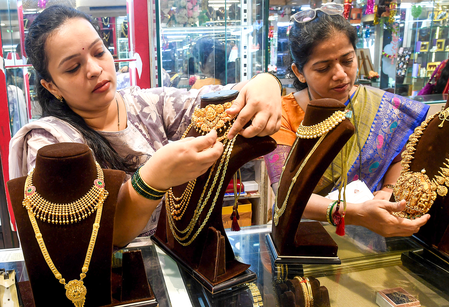
New Delhi, Jan 3 (IANS) As 2025 turned out to be historic for precious metals, with gold delivering returns of nearly 65 per cent and silver outperforming with gains of over 140 per cent, an expert said that the positive momentum likely to continue in 2026 as well.
Speaking to IANS, Nainesh Pachchigar, Gujarat President of the India Bullion and Jewellers Association (IBJA), said gold and silver rewarded investors handsomely in 2025, and given prevailing global conditions, the positive momentum could continue this year as well.
“International prices are currently hovering around $4,300 per ounce and could potentially rise to $5,000 per ounce,” Pachhigar noted while elaborating on the outlook for gold.
“This suggests an upside of nearly $700 per ounce, or over 16 per cent, from current levels,” Pachchigar stated.
On silver, Pachhigar said the metal also holds strong prospects. He expects silver prices to climb to around $85 per ounce in the coming period, compared to the current level of about $70 per ounce.
“Silver prices to climb to around $85 per ounce in the coming period, compared to the current level of about $70 per ounce,” Pachhigar added.
“This indicates a possible additional upside of nearly 20 per cent in 2026,” he mentioned.
Sharing his views on the diamond market, Pachhigar said lab-grown diamonds are witnessing significantly higher demand globally compared to natural diamonds, largely due to their lower prices.
He added that the affordability factor is likely to keep demand for lab-grown diamonds strong over the next few years.
However, he also believes that demand for natural diamonds could revive after three to four years, though it is expected to remain subdued in the near term.
Market experts attribute the strong performance of gold and silver in 2025 to heightened global uncertainty, US tariff-related concerns, and rising geopolitical tensions among major economies.
Meanwhile, Nuvama Professional Clients Group also anticipated that both the precious metals are likely to maintain their bullish trend with dips and consolidation phases in between.
–IANS
pk