
Radio Brisvaani

Kochi, March 17 (IANS) The Central Marine Fisheries Research Institute (CMFRI) has initiated a two-year, Rs 4.986 crore research programme to explore fishery resources linked to seamount ecosystems in the Arabian Sea, with a sharp focus on commercially and ecologically significant cephalopods.
Funded by the Ministry of Earth Sciences, the project seeks to document the diversity, distribution, ecology and biology of squid, cuttlefish, and octopus populations concentrated around seamount regions in the eastern Arabian Sea.
The initiative aligns with Vertical-3 of the Deep Ocean Mission, reflecting the Centre’s push to deepen scientific and economic understanding of marine resources.
A key deliverable of the project is the development of Artificial Intelligence-based tools for automated species identification.
These tools are expected to enhance taxonomic precision, reduce manual classification time, and support scalable monitoring of deep-sea biodiversity, an area still largely underexplored in Indian waters.
The research is being executed jointly by CMFRI’s Kochi headquarters and its Mangaluru Regional Centre, in collaboration with the National Institute of Technology, Surathkal.
The first exploratory survey has already been completed, targeting selected seamounts in the southeastern Arabian Sea.
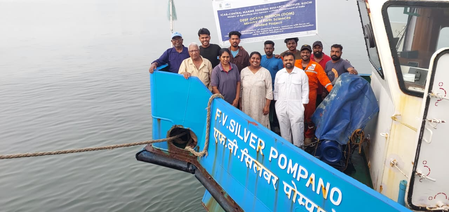
Field operations were carried out aboard CMFRI’s research vessel F.V. Silver Pompano, led by senior scientists, alongside parallel sampling missions conducted from Azheekal Fishing Harbour in Kollam.
The surveys focused on mapping cephalopod assemblages and assessing their association with seamount habitats.
According to project investigators, the findings are expected to provide critical insights into deep-sea ecosystem dynamics and inform sustainable exploitation strategies.
This assumes significance amid growing global interest in seamounts, which are increasingly recognised as biodiversity hotspots supporting dense populations of demersal and benthopelagic species.
Seamounts underwater elevations rising over 100 metres from the ocean floor are known to host rich biological communities due to nutrient upwelling and unique habitat structures.
As scientific and commercial interest in these ecosystems grows, the CMFRI-led initiative could play a pivotal role in shaping India’s long-term deep-sea fisheries and conservation policies.
–IANS
sg/vd