Radio Brisvaani

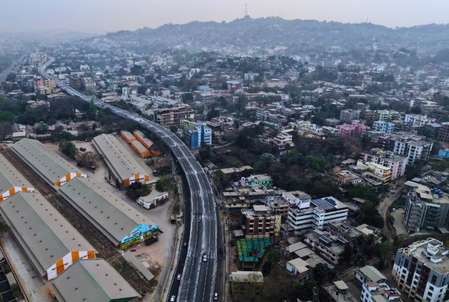
New Delhi, March 15 (IANS) India’s Northeast region is witnessing a major strategic and economic transformation driven by large-scale connectivity and infrastructure initiatives undertaken in recent years, according to a report by India Narrative.
The report, titled “Bridging the North East: Connectivity Drives a New Strategic Frontier”, authored by Brigadier Ranjit Borthakur, Sena Medal (Retd.), highlights how sustained investments in roads, railways, bridges, waterways and air connectivity are reshaping the development landscape of the region while also strengthening national security and supporting India’s Act East Policy.
According to the report, successive visits to the Northeast by Prime Minister Narendra Modi in the first three months of 2026 underline the Centre’s commitment to the region’s development.
“Successive visits to the Northeast in the first three months of the year (2026) by Prime Minister Narendra Modi amply demonstrate his commitment towards development of the strategically important Northeast region of the country,” the report said.
During his latest visit to Assam on March 13 and 14, Prime Minister Modi inaugurated and laid the foundation stones for infrastructure projects worth more than Rs 47,600 crore. These included the ‘bhoomi pujan’ for the Shillong–Silchar high-speed corridor, inauguration of the Kopili Hydro-Electric Project, the Numaligarh–Siliguri Product Pipeline Capacity Enhancement Project and railway electrification projects.
The visit also marked a significant welfare initiative for tea garden workers in the state.
Land ownership certificates were distributed to nearly 3.5 lakh workers across 825 tea gardens — described as a historic step since their ancestors were brought to the region from the Chotanagpur Plateau by the British nearly two centuries ago.
Earlier, during a visit on January 17–18, PM Modi performed the ‘bhoomi pujan’ of the proposed Kaziranga Elevated Corridor, a 35-km project estimated to cost around Rs 6,950 crore.
According to the report, the project is aimed at protecting wildlife in Kaziranga National Park during the monsoon season while improving connectivity to eastern Assam and neighbouring states.
“While vehicles will pass over the elevated corridor, the animals will pass underneath without any hindrance,” the report noted, highlighting its environmental significance.
The Prime Minister also flagged off two new Amrit Bharat Express trains connecting the Northeast with northern India, further improving rail connectivity for passengers and trade.
The report also highlighted the inauguration of the Kumar Bhaskar Barman Bridge over the Brahmaputra river on February 13.
Built at a cost of Rs 3,030 crore, the bridge connects Guwahati with North Guwahati and is expected to ease congestion in the city while improving regional mobility.
Another major infrastructure initiative approved by the Centre is an underwater tunnel beneath the Brahmaputra river connecting Gohpur and Numaligarh.
The 15.79-km four-lane tunnel, estimated to cost Rs 18,600 crore, will reduce the distance between the two towns from about 240 km to 34 km.
According to the report, the project will also have strategic significance.
“What is equally important is that, besides helping the region in trade and commerce, this will provide another avenue for the induction of the Army to the Arunachal border,” it added.
The report also noted that the Union government has been expanding emergency landing facilities on national highways to strengthen defence preparedness and disaster response. One such facility was inaugurated at Moran near Dibrugarh.
It also highlighted improvements in inland waterways, airports and logistics infrastructure across the Northeast, saying that enhanced connectivity through road, rail, air and waterways is accelerating economic development while reinforcing India’s Act East Policy.
“Construction of bridges and other infrastructure such as the elevated corridor, underwater tunnel, airports, as well as inland water transport, not only brings economic prosperity to the region but also addresses the country’s security concerns while augmenting India’s Act East Policy,” the report said.
The analysis concluded that sustained infrastructure development and connectivity expansion are driving holistic growth in the Northeast, benefiting sectors such as agriculture, industry, and employment generation while strengthening India’s strategic position in the region.
–IANS
rs/khz