Radio Brisvaani

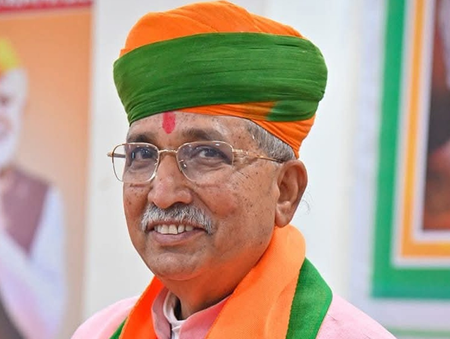
New Delhi, Dec 20 (IANS) A latest report of the National Crime Records Bureau (NCRB) shows that the overall conviction rate for Indian Penal Code crimes in 2023 stands at 54 per cent, with a charge sheeting rate of 72 per cent, Minister of State for Law and Justice Arjun Ram Meghwal said.
Responding to a question in Rajya Sabha on Friday, the MoS said the conviction rate largely depends on the quality of investigation and evidence, including the oral evidence and expeditious trial, for which the Government of India has taken various steps.
He said that while various provisions in this regard have been introduced under the New Criminal Laws, numerous technological interventions have been made under the Interoperable Criminal Justice System and eCourts Project.
Meghwal said the eSakshya platform, designed in line with the Bharatiya Sakshya Adhiniyam, 2023, integrates cutting-edge technology to streamline the collection, management, and exchange of digital evidence.
The eSakshya Mobile App captures critical evidence directly at the crime scene
and records statements, documents scenes, and uploads findings in real-time, ensuring that no detail is overlooked, he said.
It stores investigative data fast and securely with an encrypted locker, and guarantees data integrity and confidentiality, providing a safe locker for all digital evidence, he said, adding that the evidence on the eSakshya platform is meant to be accessed directly by the court.
Meghwal said the Government of India is also implementing the e-Courts Project Phase-III with an outlay of Rs 7,210 crore over four years to transform courts into digital and paperless courts by digitising legacy and current case records, expanding
video conferencing to all courts, jails, and selected hospitals, and extending online courts beyond traffic violations.
He said the project aims at the creation of a state-of-the-art cloud-based data repository
for storing digitised court records and applications, and deployment of emerging technologies such as Artificial Intelligence (AI) and Optical Character Recognition (OCR).
The Digital Courts 2.1 platform enables judges to access all case-related documents, pleadings, and evidence digitally, marking a significant leap toward a paperless court ecosystem, he said.
Elaborating on the provision of Fast Track Special Courts (FTSCs), Meghwal said, “A Centrally Sponsored Scheme for the establishment of FTSCs, including exclusive POCSO (ePOCSO) Courts, was launched in October 2019. These courts are dedicated to the time-bound trial and disposal of pending cases related to rape and crimes
under the Protection of Children from Sexual Offences (POCSO) Act, 2012.”
He said this Scheme for the establishment of 790 courts has been extended twice, with the latest extension up to 31st March 2026. As per the information received from the High Courts, as on March 31, 2025, 745 FTSCs, including 404 exclusive POCSO (e-POCSO) Courts were functional in 30 States/UTs, with a cumulative disposal of 3,19,685 cases since the inception of the scheme.
–IANS
rch/dan