Radio Brisvaani

New Delhi, Dec 28 (IANS) A major step in India’s defence manufacturing journey is quietly taking shape on the outskirts of Hyderabad.
Raghu Vamsi Aerospace Group has launched its new Citadel Campus at Hardware Park near the international airport — marking an important moment for the country’s growing private defence industry.
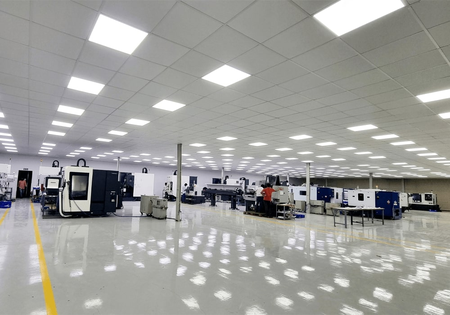
Spread over 25,000 square feet and built with an investment of more than Rs 100 crore, the Citadel Campus is not just another industrial facility.
It brings together design, manufacturing, integration, testing and validation of defence systems under one roof, reflecting how far India’s defence ecosystem has evolved.
What was once limited to licensed production and basic assembly has now moved towards full-scale, indigenous capability.
The new campus strengthens Raghu Vamsi Aerospace Group’s role in strategic defence programmes. The company already operates ten manufacturing facilities across three countries and employs over 1,000 skilled professionals.
It supplies critical aero-engine and missile subsystems to global aerospace companies as well as Indian defence public sector units. With the Citadel Campus, the group aims to improve production speed, scale up manufacturing and take on more complex defence projects.
At the launch event, the company also unveiled a range of indigenously developed unmanned and autonomous defence systems. These include jet-powered loitering munitions, long-endurance kamikaze drones, tethered surveillance platforms and autonomous ground combat systems.
Designed for modern warfare, these systems can perform tasks such as surveillance, deep-strike missions, battlefield logistics and mission support. Some platforms have operational ranges of over 300 kilometres and speeds of up to 650 kmph, highlighting India’s growing capability in advanced defence technologies.
The new products, developed under names such as RV Astra, RV Maya, RV Lakshya, RV Rudra, RV Indra, RV Yodha and RV Drishti, signal a shift away from reliance on imported unmanned systems.
They show that Indian companies are now capable of designing and manufacturing sophisticated platforms that can meet the demands of future battlefields.
Alongside infrastructure and product development, Raghu Vamsi Aerospace Group announced several key partnerships to strengthen India’s defence innovation ecosystem.
One major agreement was signed with the Indian Army’s 515 Army Base Workshop to jointly design, develop, test and validate advanced drone platforms.
Under this collaboration, the workshop will be supported in becoming a system integrator and in setting up dedicated drone manufacturing facilities.
Another important agreement was signed with Bharat Dynamics Limited for the co-development and supply of fully indigenised engines in the 200 kgf thrust class for future autonomous fighter aircraft.
This partnership is seen as a significant step in strengthening India’s capabilities in aero-engine propulsion, a critical area for advanced air combat systems.
The company also entered into collaborations with academic and research institutions. An agreement with IIIT Hyderabad focuses on developing artificial intelligence-based autonomy, intelligent perception and swarm technologies for defence UAVs.
A separate MoU with the International Advanced Research Centre for Powder Metallurgy and New Materials (ARCI) aims to advance technologies such as additive manufacturing, laser cladding and thermal barrier coatings for aero-engines.
–IANS
pk