Radio Brisvaani

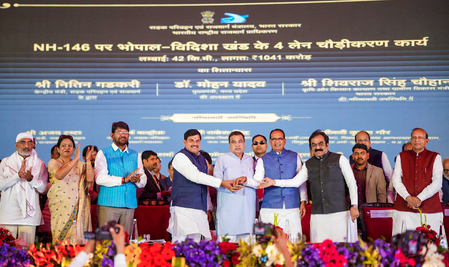
Vidisha, Jan 17 (IANS) Union Minister for Road Transport and Highways Nitin Gadkari on Saturday reiterated India’s commitment to turning agricultural waste into a valuable resource, announcing that the country is moving towards producing bitumen from farm residues like sugarcane bagasse.
Speaking at an event in Madhya Pradesh’s Vidisha district, where he inaugurated multiple national highway projects worth over Rs 4,400 crore, Gadkari emphasised farmers’ evolving role as not just food providers but also energy and material suppliers.
The Union Minister highlighted recent breakthroughs, noting that India has become the world’s first nation to commercially produce bio-bitumen—an eco-friendly alternative to petroleum-based bitumen—through innovations like pyrolysis technology developed by CSIR labs.
Bitumen is locally known as “Damar”. This follows a major technology transfer ceremony held in New Delhi on January 7, 2026, where agreements were facilitated with multiple companies to scale up production.
“As many as 15 companies have taken patents from me for producing bitumen from agri-waste like cotton straw, bagasse, wheat straw and other agricultural waste,” Gadkari said, linking it to broader sustainability goals.
He stressed that farmers should be positioned as “energy providers,” citing examples like ethanol blending (now powering vehicles nationwide), hydrogen production potential from crops, and electricity generation from farm residues in regions like Vidisha. “Our farmer is an energy provider, a fuel provider,” he added, pointing to how such initiatives reduce import dependence, cut carbon emissions, and create new revenue streams for rural communities.
The bio-bitumen initiative aims to replace a portion of India’s massive bitumen demand—largely met through imported crude—using abundant agricultural by-products such as sugarcane bagasse, rice straw, and crop stubble.
Experts estimate potential savings of billions in foreign exchange, reduced stubble burning (a key pollution source in northern India), and up to 70 per cent lower emissions compared to conventional bitumen.
Pilot projects and trials have demonstrated comparable performance in road binding, with environmental safeguards like reduced pollution and waste management. This aligns with India’s net-zero by 2070 target and the Viksit Bharat 2047 vision, fusing agriculture, industry, and green infrastructure.
Gadkari praised ongoing efforts under Prime Minister Narendra Modi, urging greater adoption of bio-materials in road construction amid record infrastructure spending. The announcement builds on CSIR’s “From Farm Residue to Road: Bio-Bitumen via Pyrolysis” technology, which has seen industry onboarding and successful test stretches.
As India accelerates towards becoming a global economic leader, such innovations position farmers at the heart of sustainable development, transforming waste into wealth for roads and energy.
–IANS
sktr/uk