Radio Brisvaani

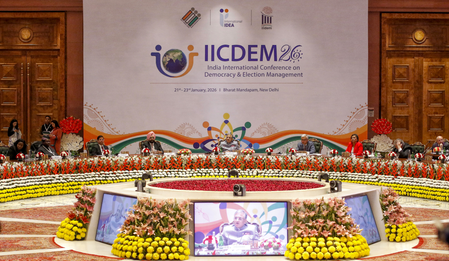
New Delhi, Jan 23 (IANS) The India International Conference on Democracy and Election Management (IICDEM) 2026 concluded successfully in New Delhi on Friday (January 23), with unanimous adoption of the Delhi Declaration.
The Delhi Declaration 2026 stands as a testament to collaborative resolve, aiming to operationalise these commitments through innovation, measurable actions, and sustained global partnership to fortify democracy for an inclusive, peaceful, resilient, and sustainable future.
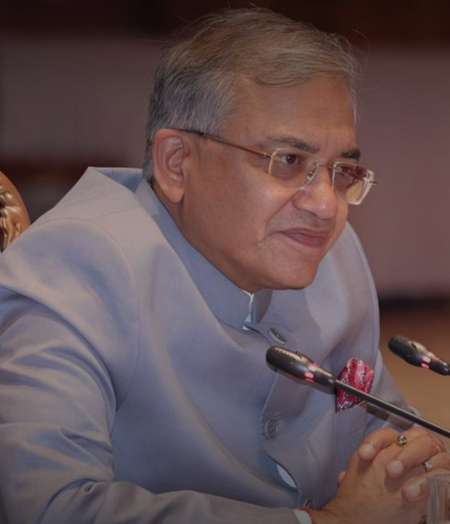
In a ceremonial reading, Chief Election Commissioner Gyanesh Kumar outlined the declaration’s five core pillars: Purity of Electoral Rolls, Conduct of Elections, Research and Publications, Use of Technology, and Training and Capacity Building. These pillars serve as a shared framework for Election Management Bodies (EMBs) worldwide to enhance the integrity, inclusivity, and efficiency of democratic processes, marking the event a significant milestone in global electoral cooperation.
Hosted by the Election Commission of India (ECI) at the Bharat Mandapam over three days from January 21 to 23, the landmark event brought together heads of 42 Election Management Bodies (EMBs) from around the world, experts from more than 70 national institutions, senior ECI officers, and 36 Chief Electoral Officers from Indian states and union territories.
Under the first pillar, participants committed to maintaining pure electoral rolls by ensuring all eligible voters are included as per legal provisions and providing photo identity cards for transparent voting. The second pillar emphasised participatory, inclusive, and stakeholder-driven elections conducted in strict accordance with constitutional and legal mandates to guarantee transparency, efficiency, and fairness.
For research and publications, the declaration resolved to produce an Encyclopaedia of Democracies of the World, including an atlas of global electoral systems verified by respective EMBs, alongside comprehensive reports on seven themes led by International IDEA and 36 themes coordinated by the India International Institute of Democracy and Election Management (IIIDEM).
Technology adoption formed the fourth pillar, with EMBs pledging to integrate modern tools while safeguarding electoral integrity, countering misinformation, and supporting voters.
India offered to share its experience with ECINET, the one-stop digital platform launched during the conference on its second day, enabling co-development of similar systems tailored to other countries’ laws and languages.
The fifth pillar focused on training and capacity building, with India extending IIIDEM’s facilities—having trained over 10,000 Indian staff and personnel from more than 100 countries in the past 15 years—to global EMBs for professionalising election conduct and roll preparation.
In his keynote address, CEC Kumar highlighted how the conference ignited vital conversations on model international electoral standards and how over 40 bilateral meetings expanded mutual cooperation and collective priorities.
Election Commissioner Sukhbir Singh Sandhu praised the openness, mutual respect, and eagerness to learn among participants, reflecting the maturity of the global electoral community.
Election Commissioner Vivek Joshi underscored ECINET’s role in demonstrating India’s technological advancements, stressing measured adoption that builds trust without replacing human oversight. The event began with a grand reception and inaugural session attended by nearly 1,000 people, including international delegates and heads of missions from 27 countries.
An EMB Leaders’ Plenary facilitated exchanges among delegation heads and ambassadors, while 36 thematic groups, supported by academic institutions and experts, delved into cross-cutting issues, best practices, and innovations.
Looking ahead, EMBs agreed to periodically review progress on the declaration’s pillars and reconvene at IIIDEM in New Delhi from December 3 to 5, 2026. The conference, the largest of its kind ever organised by India in this domain, fostered high-level discussions on strengthening democratic institutions and election processes amid contemporary challenges.
Chief Election Commissioner Gyanesh Kumar, alongside Election Commissioners Dr Sukhbir Singh Sandhu and Dr Vivek Joshi, presided over the closing session.
–IANS
sktr/uk