Radio Brisvaani

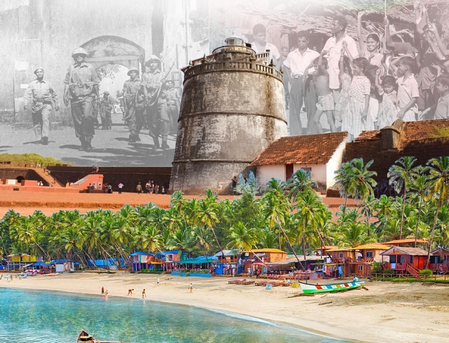
New Delhi, Dec 19 (IANS) On Goa Liberation Day, Prime Minister Narendra Modi has said that the day reminds the nation of a defining chapter in its national journey and recalled the indomitable spirit of those who refused to accept injustice and fought for freedom with courage and conviction.
Taking to the social media platform X on Friday, Prime Minister Modi said, “Goa Liberation Day reminds us of a defining chapter in our national journey. We recall the indomitable spirit of those who refused to accept injustice and fought for freedom with courage and conviction. Their sacrifices continue to inspire us as we work towards the all-round progress of Goa.”
Goa was liberated on this day in 1961.
After India attained independence in 1947, the Indian government made repeated diplomatic efforts to persuade Portugal to hand over Goa peacefully. However, Portugal rejected all negotiations and continued to claim Goa as its overseas province. This rigid stance led to the intensification of the Goa Liberation Movement, with growing participation from local leaders and the public.
In 1946, prominent leaders such as Dr Ram Manohar Lohia and Dr Juliao Menezes openly challenged Portuguese restrictions by organising public protests in Goa. Their bold actions ignited widespread resistance among Goans and strengthened the momentum of the freedom movement against colonial rule.
Peaceful protests, strikes, and acts of civil disobedience became common across the region. In response, the Portuguese administration resorted to arrests, censorship, and the use of force to suppress dissent. Many freedom fighters were imprisoned, while others were forced to operate underground. Despite severe repression, the spirit of resistance among the people of Goa remained unbroken.
T.B. Cunha is widely regarded as the “Father of Goan Nationalism” for initiating the first organised movement aimed at ending Portuguese rule in Goa. During Mahatma Gandhi’s mass movements against imperial rule, Cunha returned to India after completing his education in France and devoted himself to the cause of liberation.
In December 1961, Prime Minister Jawaharlal Nehru approved a decisive military action to liberate Goa, Daman, and Diu. Named Operation Vijay, the joint operation involved the Indian Army, Navy, and Air Force. The mission was meticulously planned to minimise casualties and was successfully completed within 36 hours. On December 19, 1961, Portuguese Governor-General Manuel António Vassalo e Silva surrendered unconditionally.
Following liberation, Goa was declared a Union Territory in 1961 and later attained full statehood in 1987.
Liberation ushered in significant political, social, and economic transformations. Goa evolved from a colonial economy into one of India’s leading tourism destinations, while Portuguese influences in architecture, language, cuisine, and festivals became a distinctive cultural identity rather than symbols of foreign domination.
–IANS
jk/dpb