Radio Brisvaani

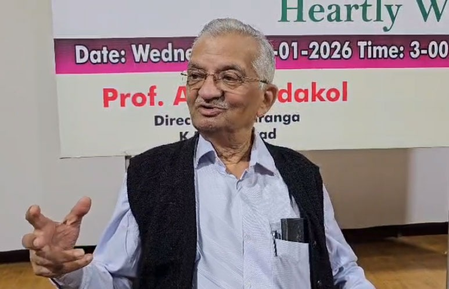
New Delhi, Jan 15 (IANS) India must essentially become energy independent, and turning focus to thorium — found in abundance in the country — from uranium is important, said Anil Kakodkar, former chairman, Atomic Energy Commission, and its current member, on Thursday.
Speaking to IANS, Kakodkar spoke on the importance of thorium in India’s nuclear energy programme.
“Earlier, it was the problem of the supply of uranium, which was necessary to kick off, which happened. But we cannot be permanently dependent. We have to become energy independent. For that, we will have to depend on energy sources of our own soil,” said the Secretary to the Government of India.
“Now, as far as nuclear is concerned, we have abundant thorium. So, we should very quickly transition from uranium to thorium. And that is the key,” he added.
Kakodkar, a nuclear physicist and mechanical engineer, also spoke about how India developed all the technology in a self-reliant manner.
While the country now has the best reactor system, and it is performing extremely well, the main challenge, however, has been fuel.
All the reactors depend on uranium, and the availability of uranium of the right quality within the country is limited. Although more uranium resources have been discovered, they are still insufficient.
Entering into Civil Nuclear Cooperation paved the way for uranium imports, which were not possible earlier, said Kakodkar.
India made agreements with countries like the US, Canada, Kazakhstan, and Australia to gain crucial uranium fuel for India’s growing civilian nuclear power programme.
With access to imported uranium, “our reactors are now running at full capacity, and overall capacity is steadily increasing. New reactors are being set up, and the government has planned a nuclear energy mission targeting 100 gigawatts,” the expert said.
However, global demand for uranium is increasing, and its total availability in the world is finite. Thus, countries can only secure limited supplies.
“You can’t get all of it for yourself. For that matter, even if you take a somewhat higher proportion, there will be restrictions, there will be problems, there will be price issues. So, I think, going forward, we have to address this challenge,” Kakodkar said.
“While the Civil Nuclear Cooperation Agreement helped us to come this far, we must now focus on thorium. We must focus on thorium now,” he told IANS.
–IANS
rvt/