Radio Brisvaani

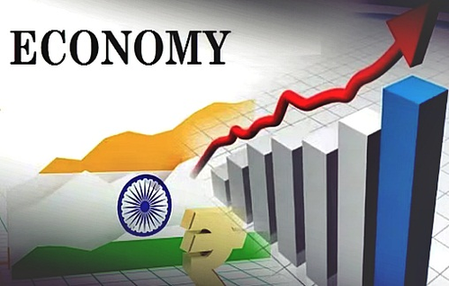
New Delhi, Jan 29 (IANS) India has recorded the lowest inflation rate since the beginning of the CPI series, with April-December 2025 average headline inflation coming in at 1.7 per cent, along with a robust GDP growth of 8 per cent, according to the Economic Survey 2025-26 tabled in the Parliament on Thursday.
The survey attributes the moderation in retail inflation primarily to the general disinflationary trend in food and fuel prices, which together account for 52.7 per cent of India’s Consumer Price Index (CPI) basket.
Over the past four years, average retail inflation, as measured by CPI, has followed a clear downward trajectory, declining steadily from 6.7 per cent in 2022–23.
This disinflation was driven primarily by the food items, reflecting favourable weather conditions and higher production that boosted supply. In contrast, core inflation — which excludes volatile components such as food and fuel –remained relatively stable and has shown a modest uptick during this period.
The increase in average core inflation is largely driven by sharp increases in the prices of precious metals — gold and silver — which have touched lifetime highs amid heightened global uncertainty and strong safe-haven demand. When these components are excluded, core inflation exhibits a declining trajectory, broadly mirroring the moderation in headline inflation, the survey observes.
Over the past two years, inflation has been gradually easing in clothing and footwear, housing, and health, while fluctuating in transport and communication. This disinflation reflects easing input costs, improved supply conditions, and competitive pressures in goods markets where prices adjust more frequently.
The survey notes that among major Emerging Markets & Developing Economies (EMDEs), India has recorded one of the sharpest declines in headline inflation in 2025, amounting to about 1.8 percentage points. Importantly, this disinflation has occurred alongside robust GDP growth of 8 per cent in H1 FY 2026, underscoring India’s strong macroeconomic fundamentals and its ability to sustain growth, while effectively managing price pressures.
While upgrading India’s sovereign rating, global rating agencies have also acknowledged the credibility and effectiveness of India’s inflation management. S&P observed that “Monetary policy reform to switch to inflation targeting has reaped dividends. Inflationary expectations are better anchored than they were a decade ago”.
Between 2008 and 2014, India’s inflation reached double-digits on numerous occasions. In the past three years, despite volatility in global energy prices and supply-side shocks, CPI growth averaged 5.5 per cent. In recent months, it stayed at the lower bound of the Reserve Bank of India’s (RBI) target range of 2-6 per cent. These developments, coupled with a deep domestic capital market, reflect a more stable and supportive environment for monetary settings, the survey states.
The world has seen a broad-based and sustained moderation in inflation across advanced, emerging, and developing economies this year. The global headline inflation has declined from a peak of 8.7 per cent in calendar year 2022 to 4.2 per cent in calendar year 2025.
–IANS
sps/vd