Radio Brisvaani

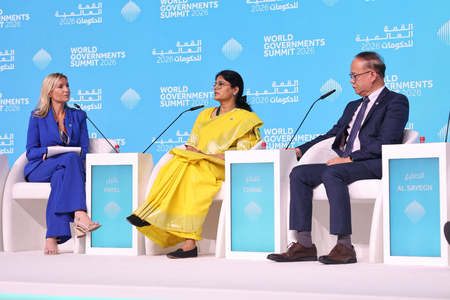
New Delhi, Feb 5 (IANS) Integrating Ayush with modern medicine in public health can help boost Universal Health Coverage, said Anupriya Patel, Minister of State for Health & Family Welfare, on Thursday.
Speaking at the third day of the World Governments Summit, held in Dubai, UAE, she highlighted the need to shift health systems towards prevention and long-term wellbeing.
Addressing the session “From Policy to Practice: Investing in the Future of Integrative Medicine”, Patel noted that the rising burden of non-communicable diseases, mental health challenges, and lifestyle disorders driven by urbanisation, unhealthy diets, physical inactivity, and chronic stress requires moving beyond episodic, curative care.
“The convergence of AYUSH systems with modern medicine and public health frameworks as a strategic pathway to building a resilient, preventive, and people-centric health ecosystem. This approach aligns closely with the goals of Universal Health Coverage,” the Minister said.
Patel also outlined India’s policy-led and systems-driven approach to integrative healthcare.
She highlighted how India has pioneered the structured integration of its rich traditional medical systems with modern scientific medicine, translating ancient knowledge into scalable, evidence-based public health models with relevance for health systems worldwide.
According to the World Health Organisation, 88 per cent of member states have traditional systems of medicine that are culturally accepted.
Earlier, speaking in a media interview, Patel shared that integrative healthcare has been institutionalised in India.
The National Health Policy (NHP) 2017 provides a powerful mandate for integrative healthcare in India. Patel stated that the integrative healthcare model has been operationalised across primary, secondary, and tertiary healthcare systems in the country.
At the primary level, Ayushman Arogya Mandirs across the country now deliver traditional medicine services, including Ayush practices such as yoga and wellness.
Ayush blocks function at secondary healthcare facilities, and national tertiary institutions are establishing dedicated integrative healthcare units, the Minister said, adding the inclusion of traditional medicine in medical education systems.
–IANS
rvt/